Fibre Reinforced Precast Concrete
Faster, Easier and Cheaper
Corrosion Free Reinforcement for Modern Precast Manufacturing

What is Fibre Reinforced Precast Concrete?
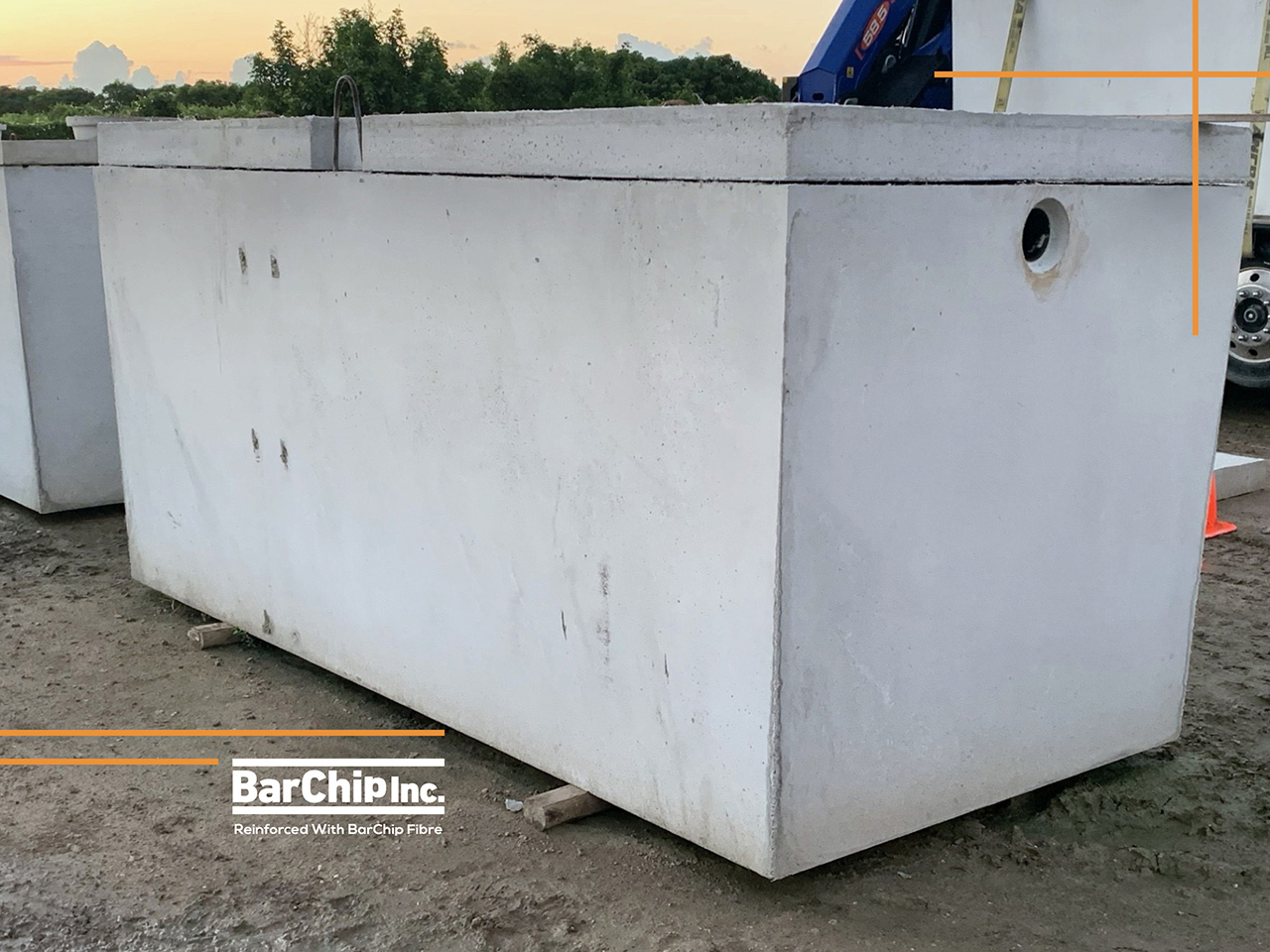
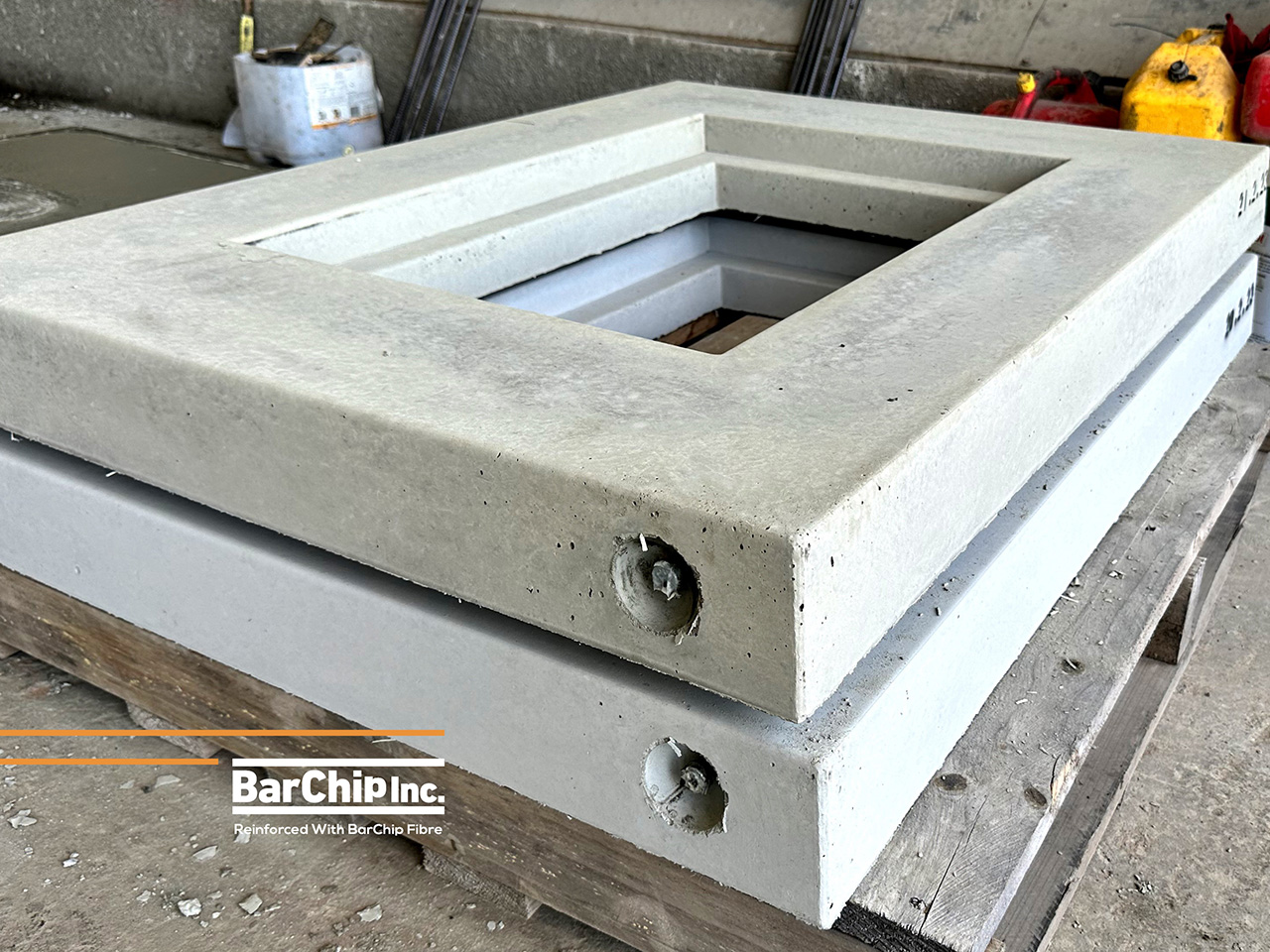
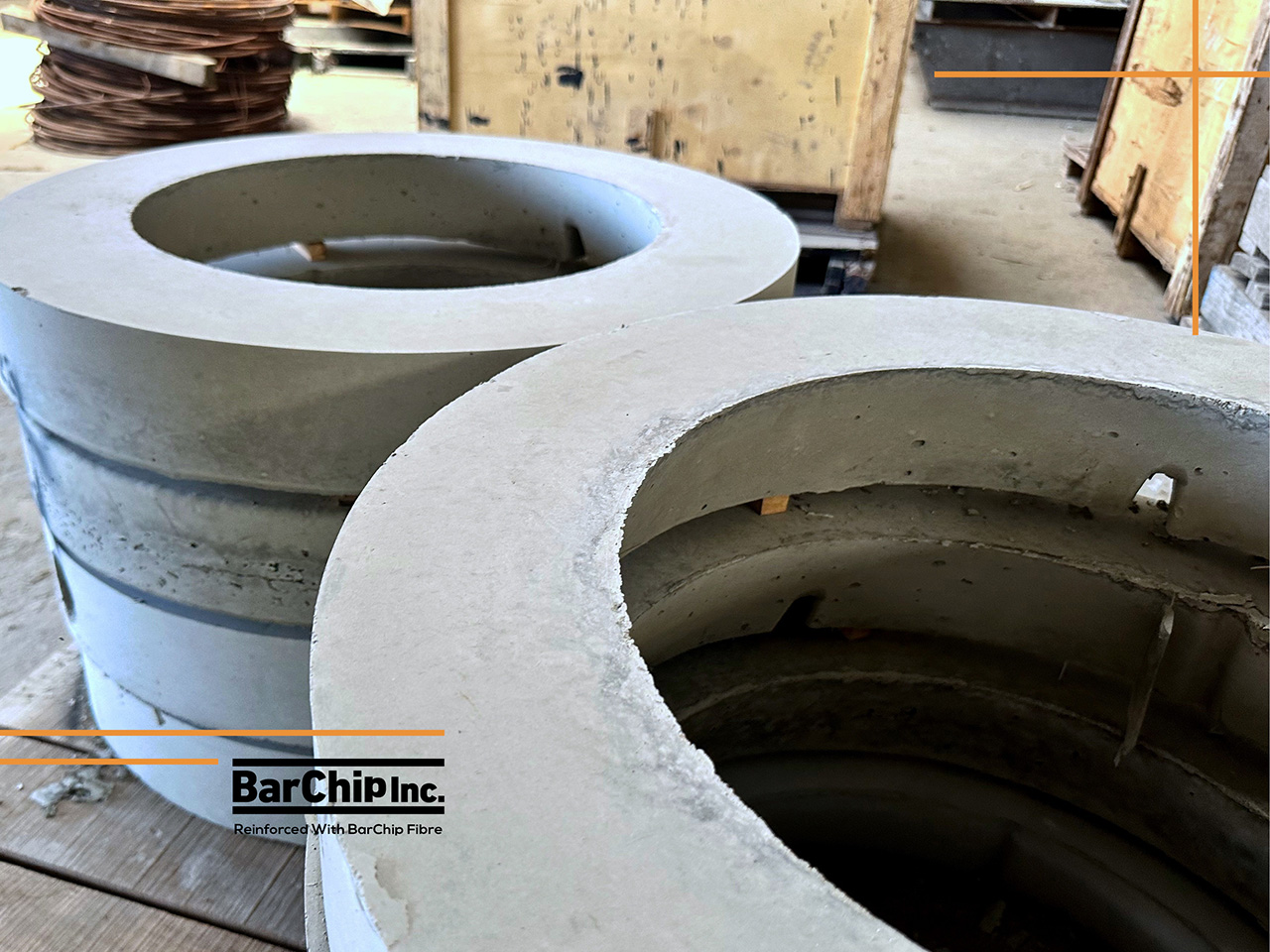
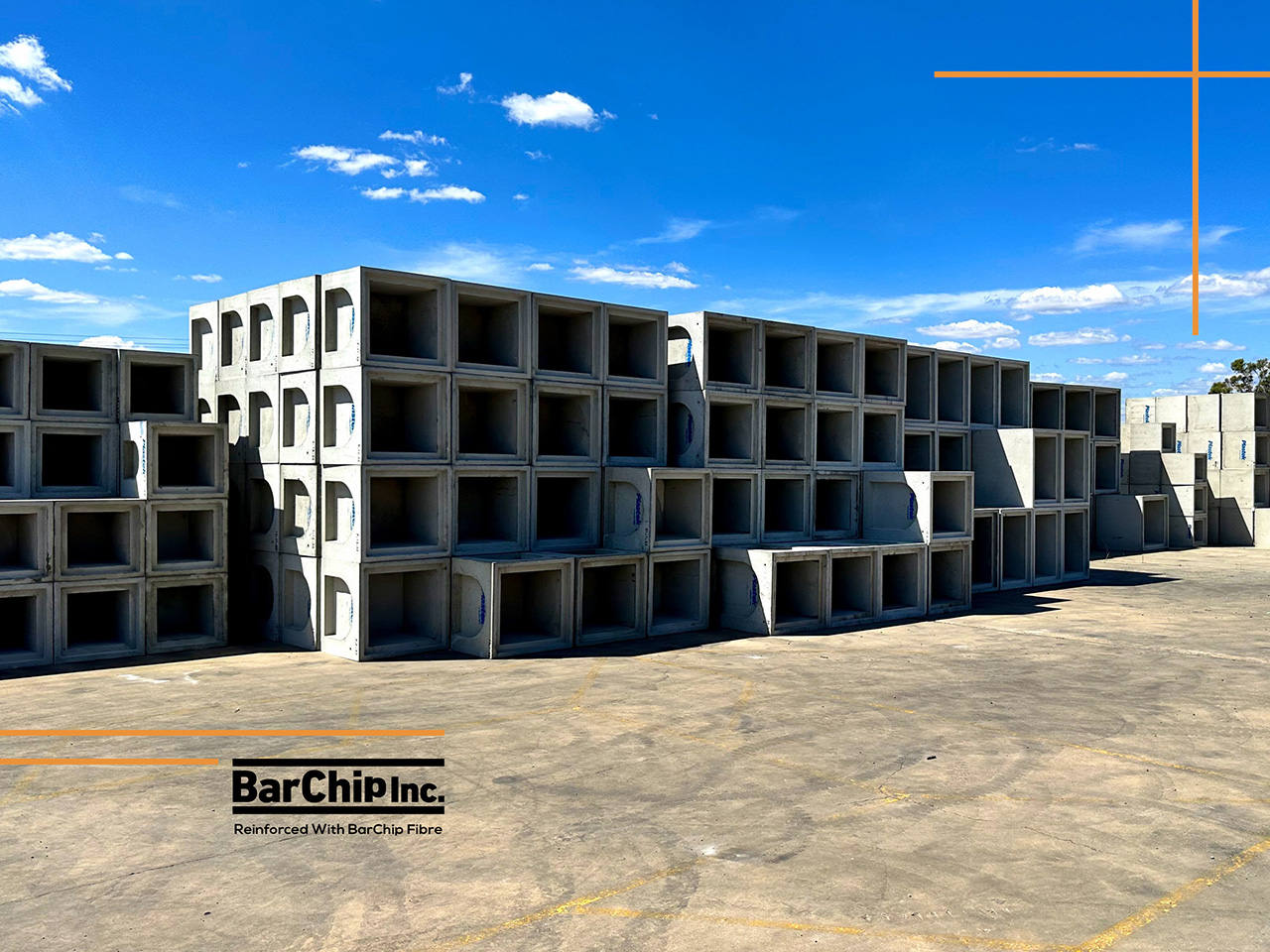
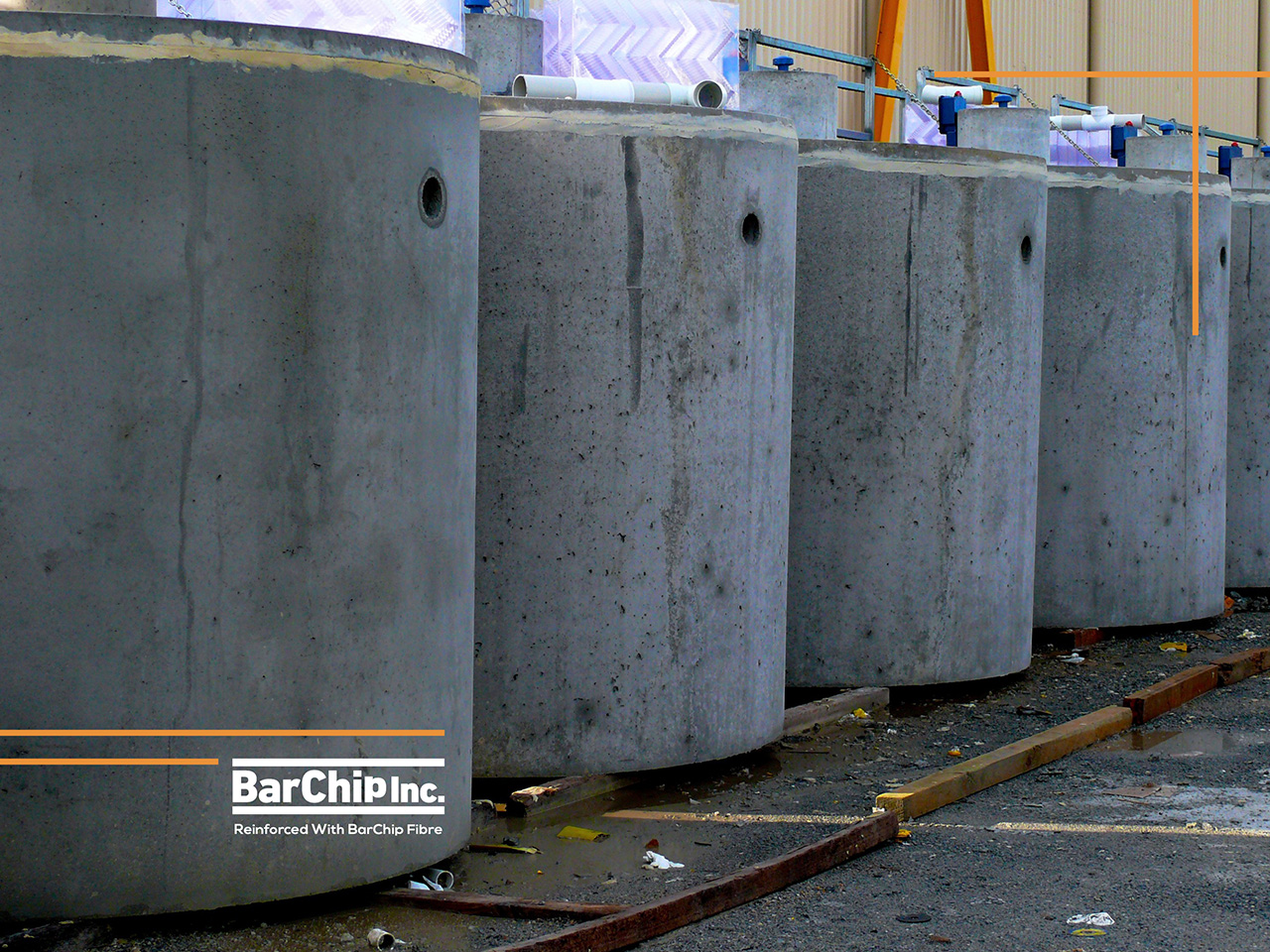
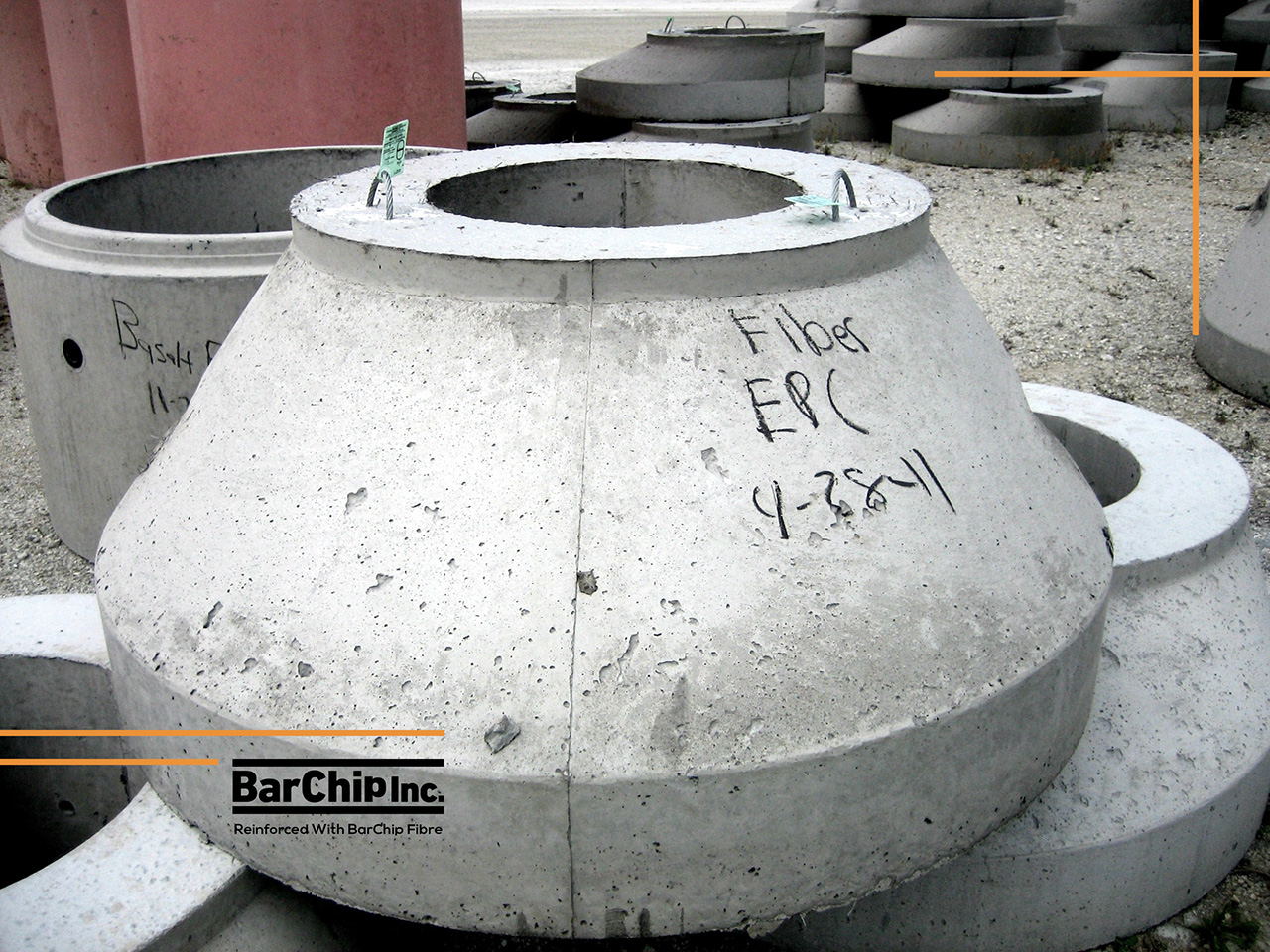
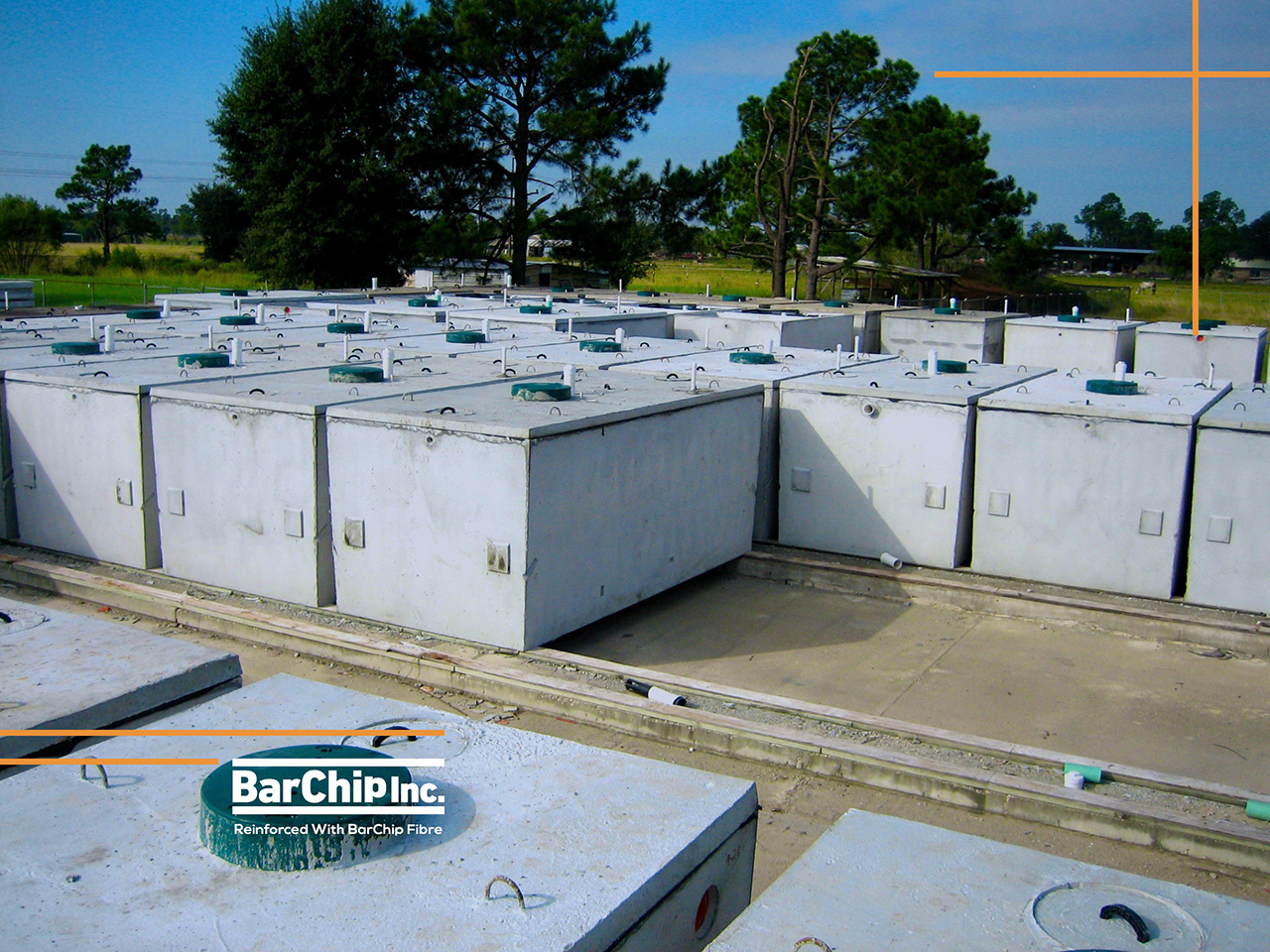
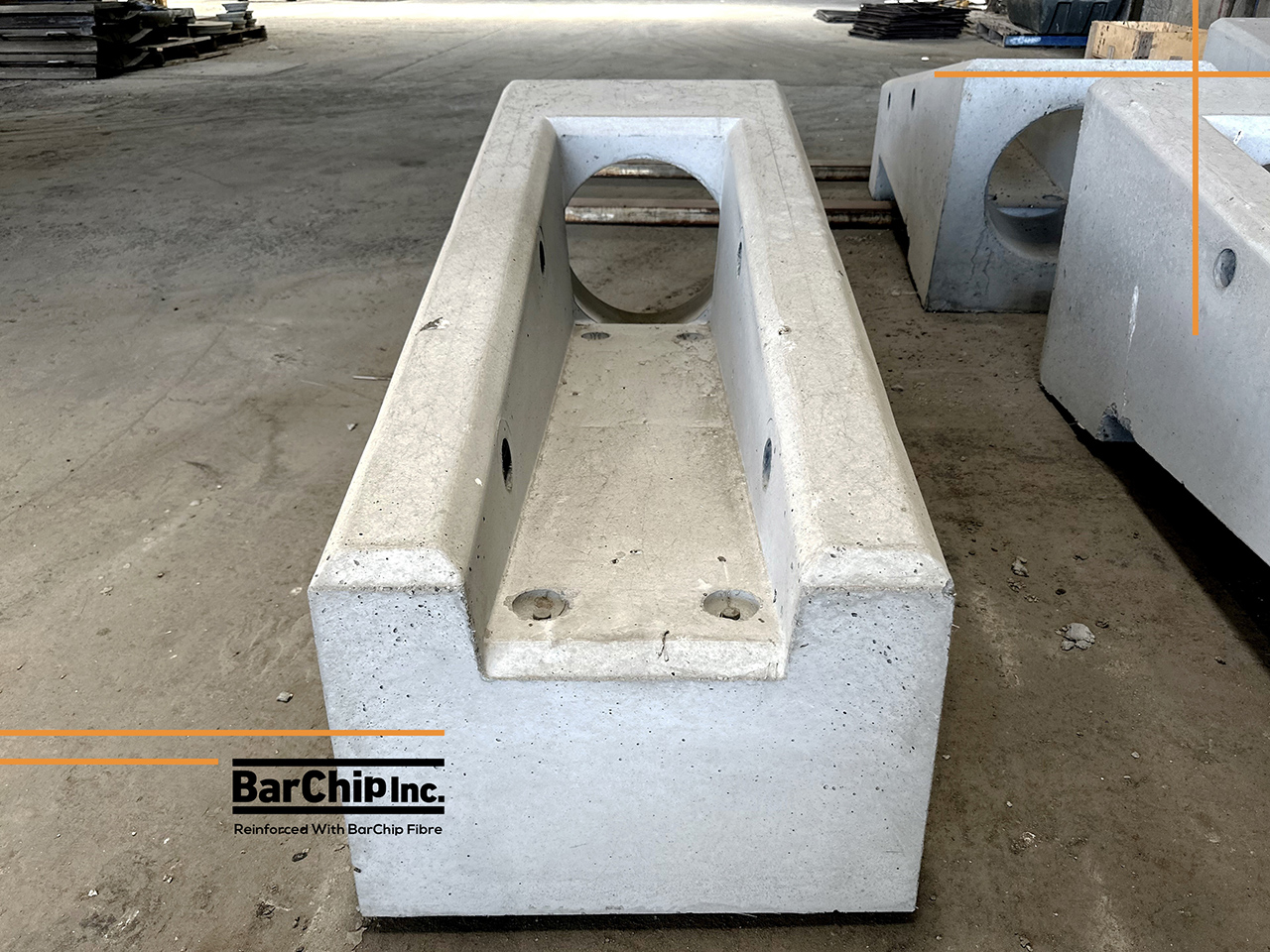
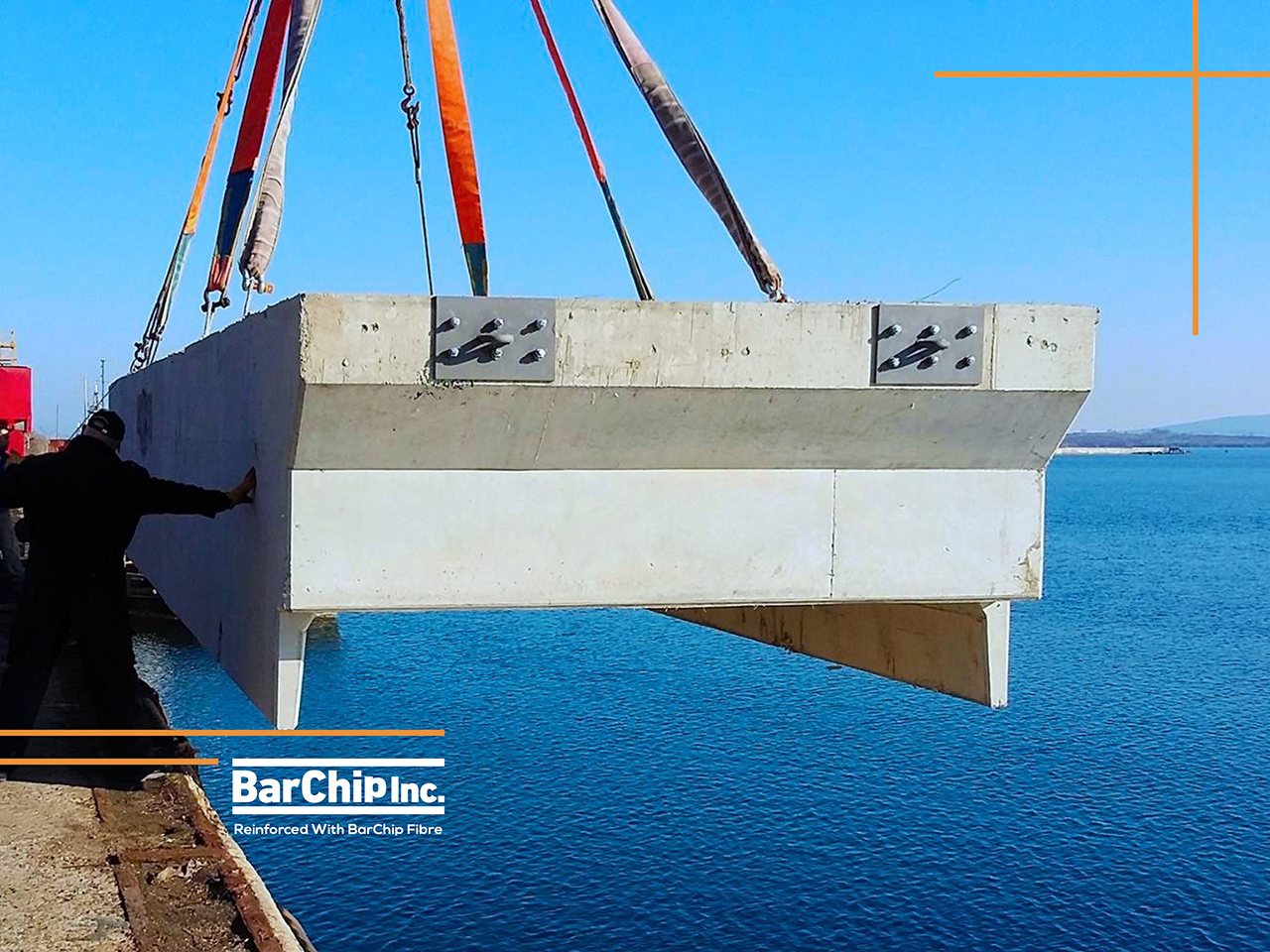
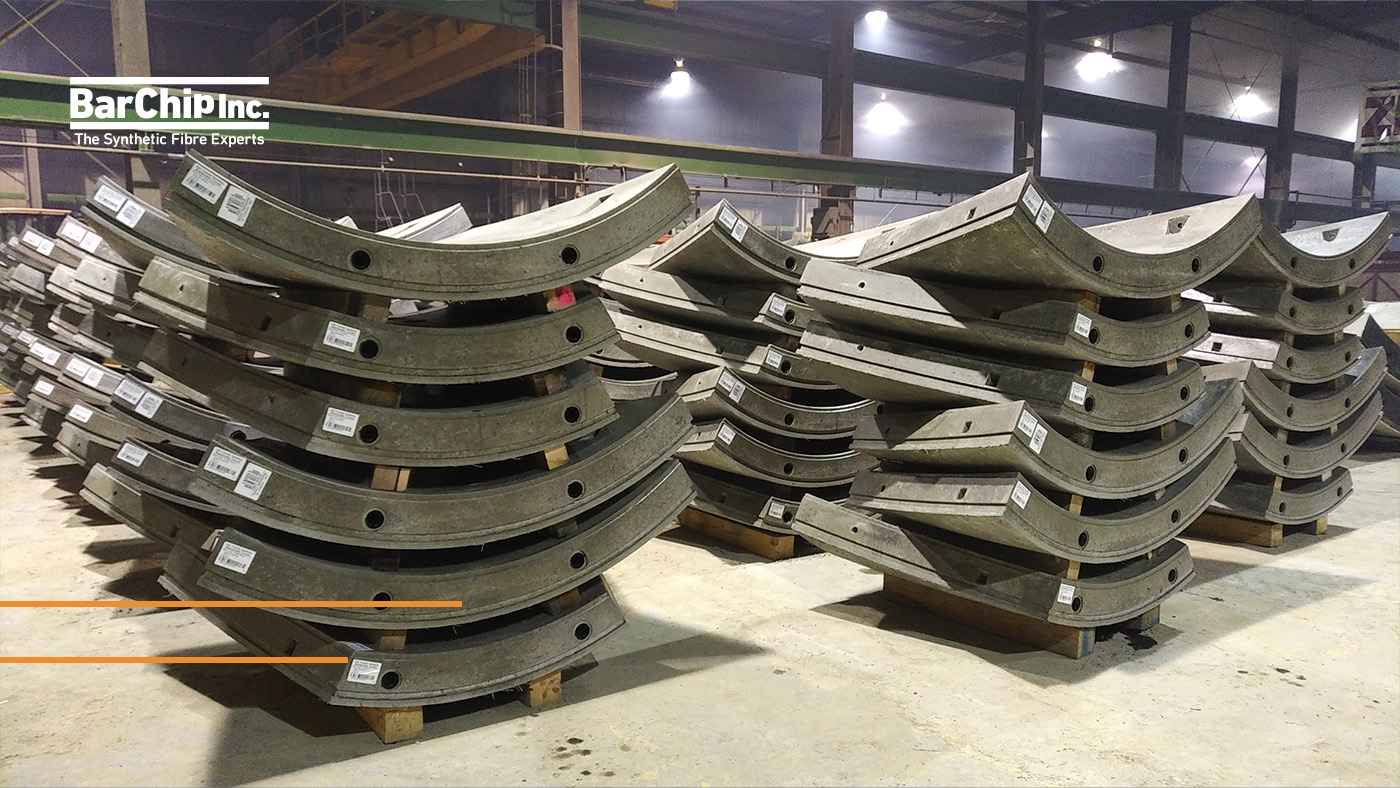
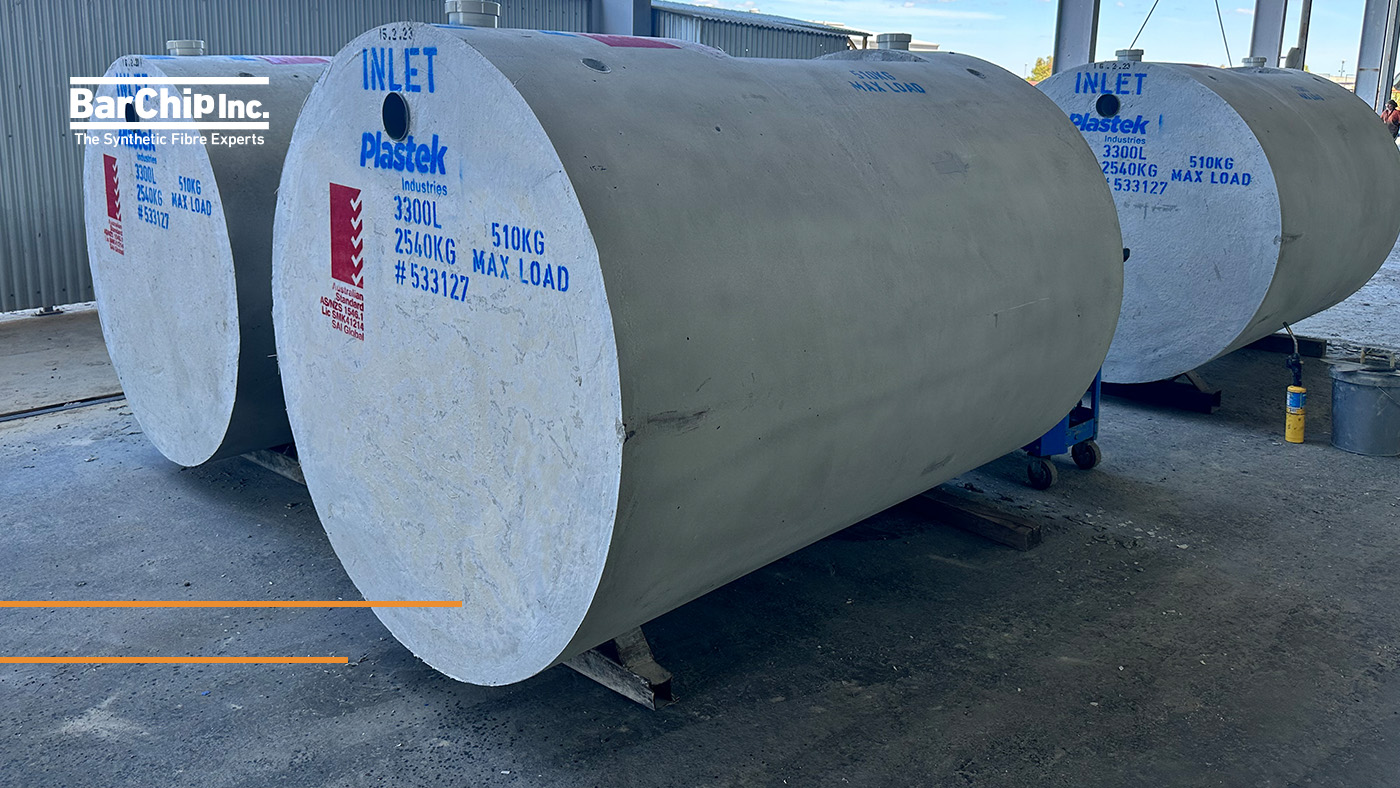
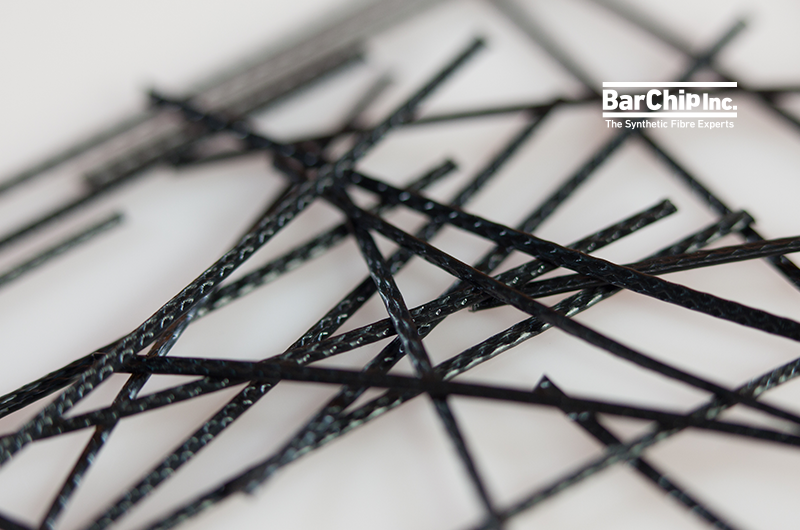
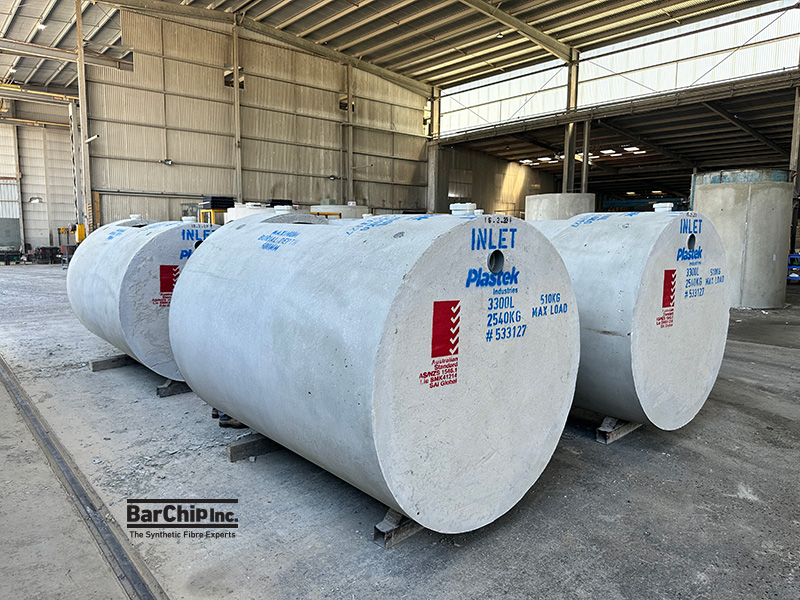
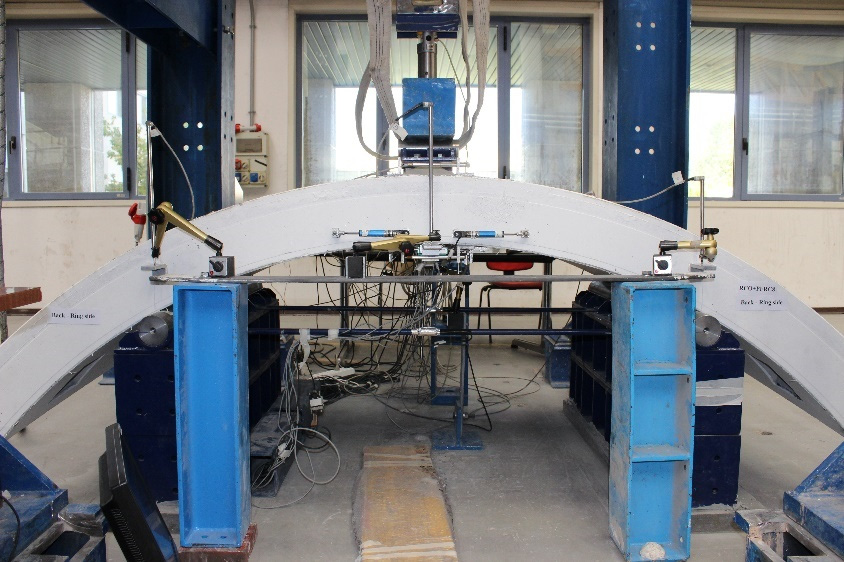
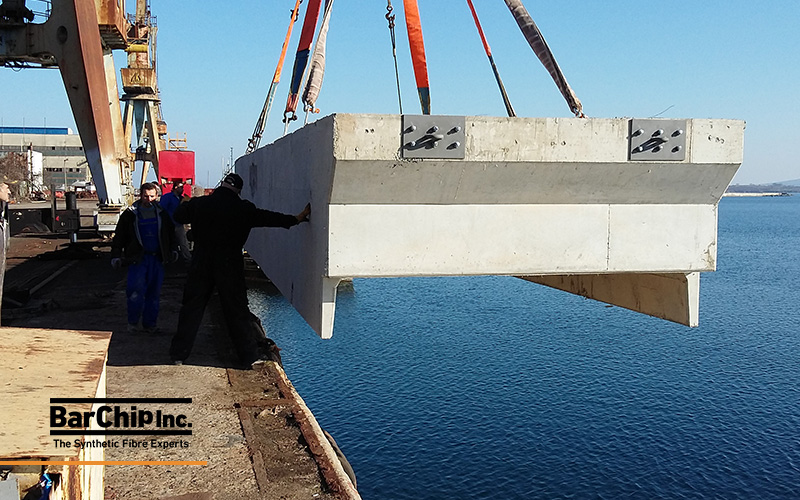
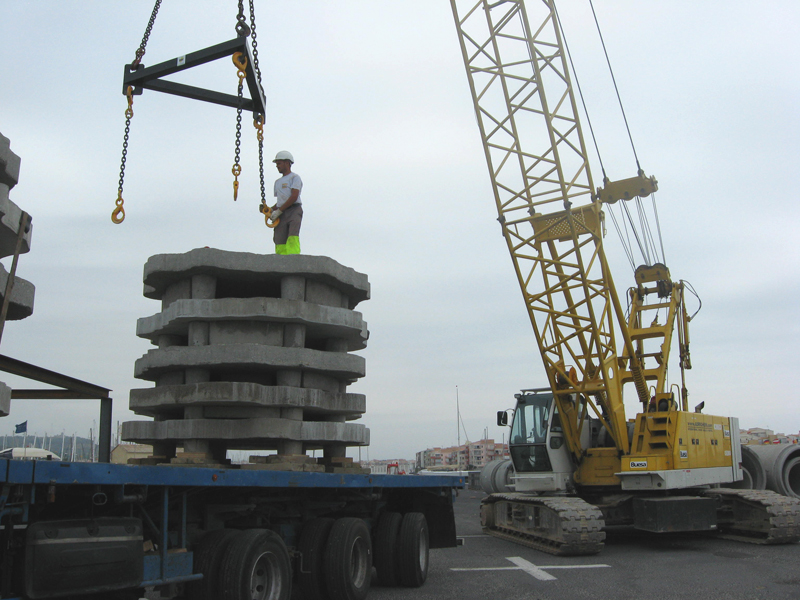
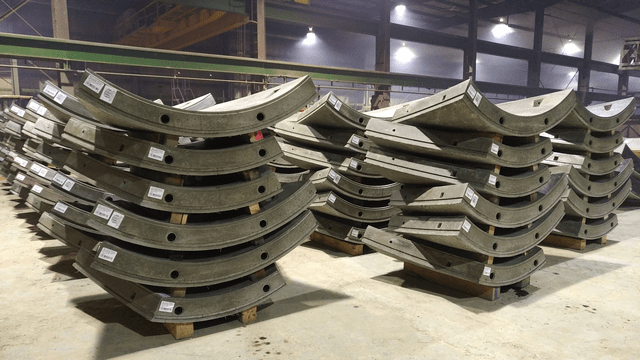
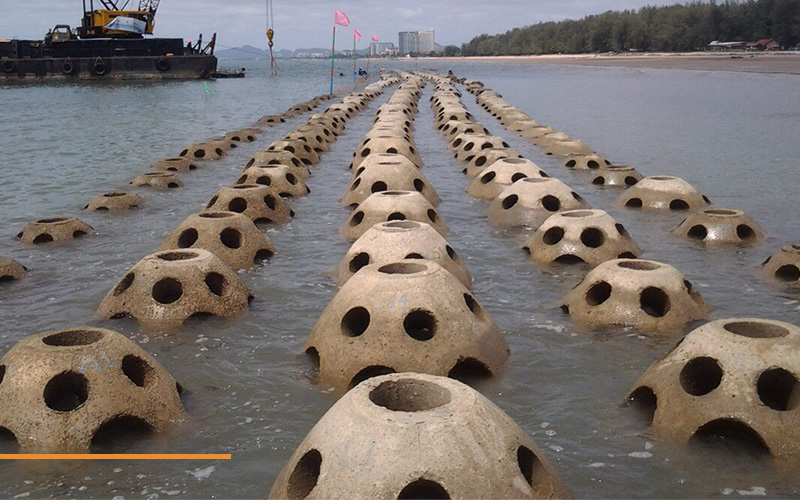
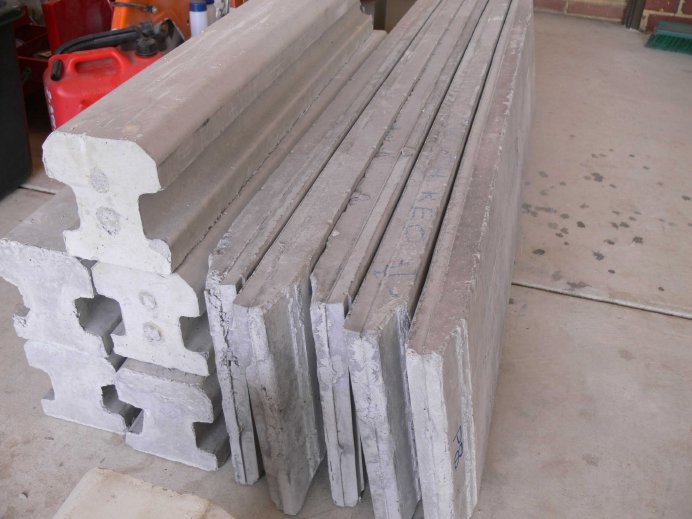
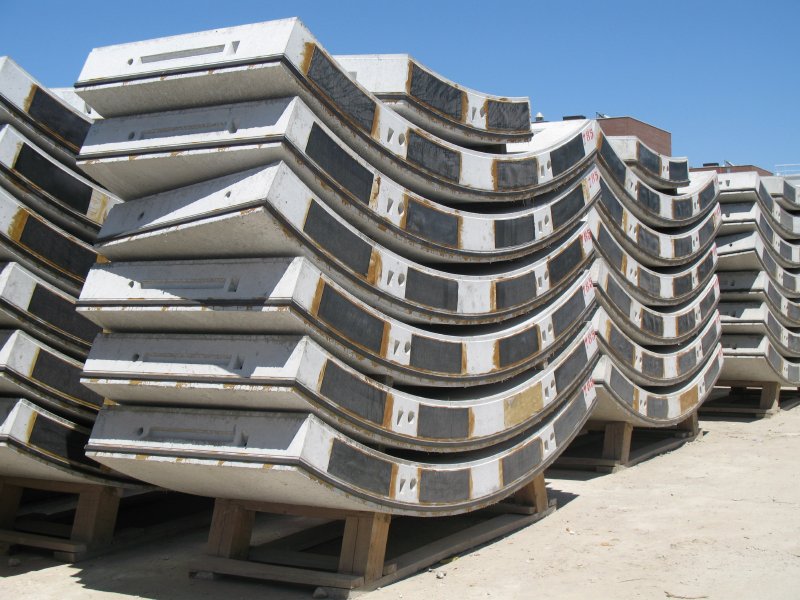
Fibre reinforced precast concrete uses thousands of high tensile strength fibres distributed throughout the concrete mix to provide reinforcement without the need for traditional steel mesh or rebar. Replacing steel with macro synthetic fibre simplifies manufacturing, reduces labour requirements and eliminates corrosion risk, all while maintaining the structural performance required for most precast concrete applications. Today, BarChip macro synthetic fibre reinforces a wide range of precast elements including tunnel segments, concrete pipes, water tanks, septic systems, retaining walls, ballast pads and more.
The World’s Best Fibre for Precast Concrete
BarChip48 is recognised the world over as the number one fibre for precast concrete. In comparison testing of more than 20 different fibres, BarChip delivers the best result in EN14651 and AS3600 beam testing.


Get Fibre Concrete Designs in Minutes
Using custom built tools based on ACI 544 and TR34 design methods, you can quickly determine the feasibility of BarChip fibre in your project. BarChip’s free to use design app is fast, simple to use and lets you generate reports straight from the app in just minutes. Suitable for flooring, paving and shotcrete applications.
BarChip Fibre Reinforced Precast Concrete Projects
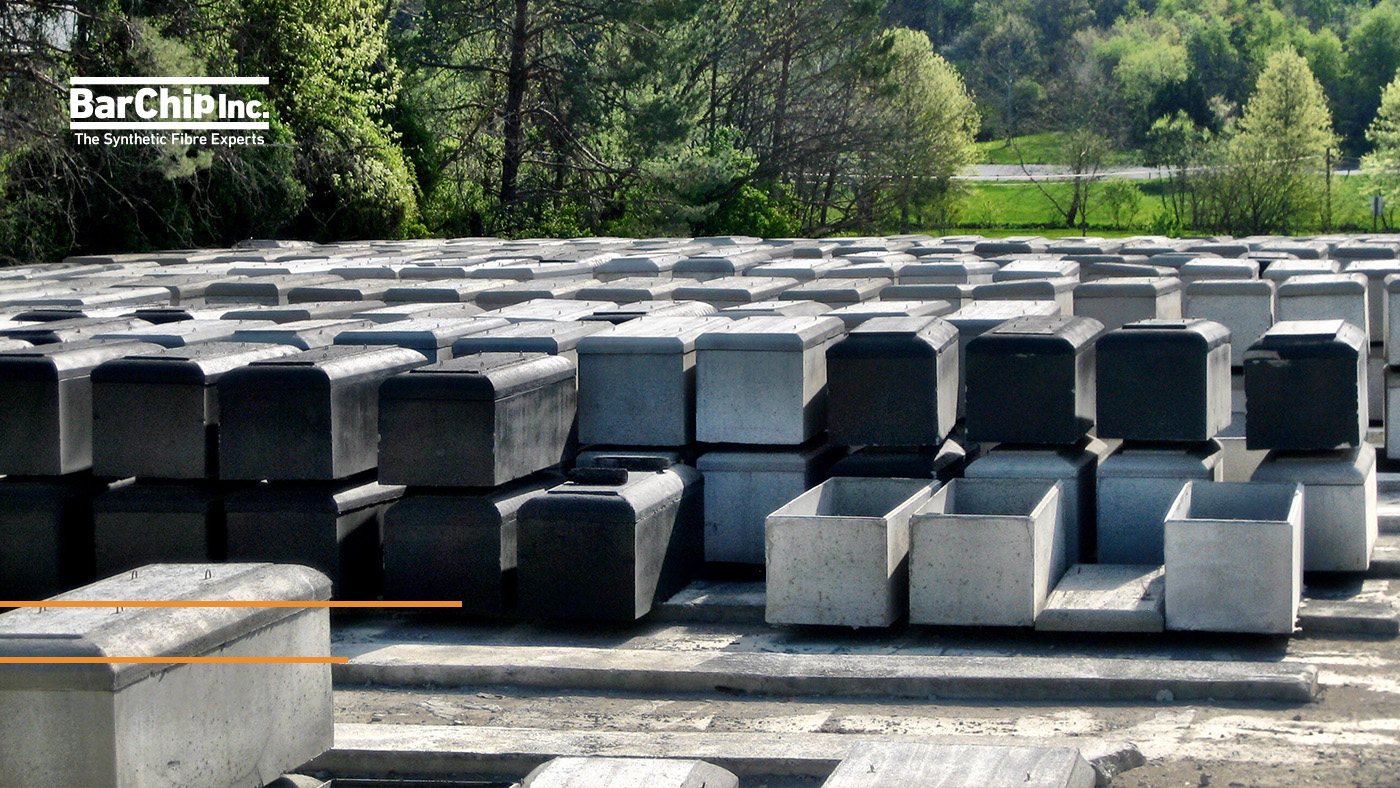
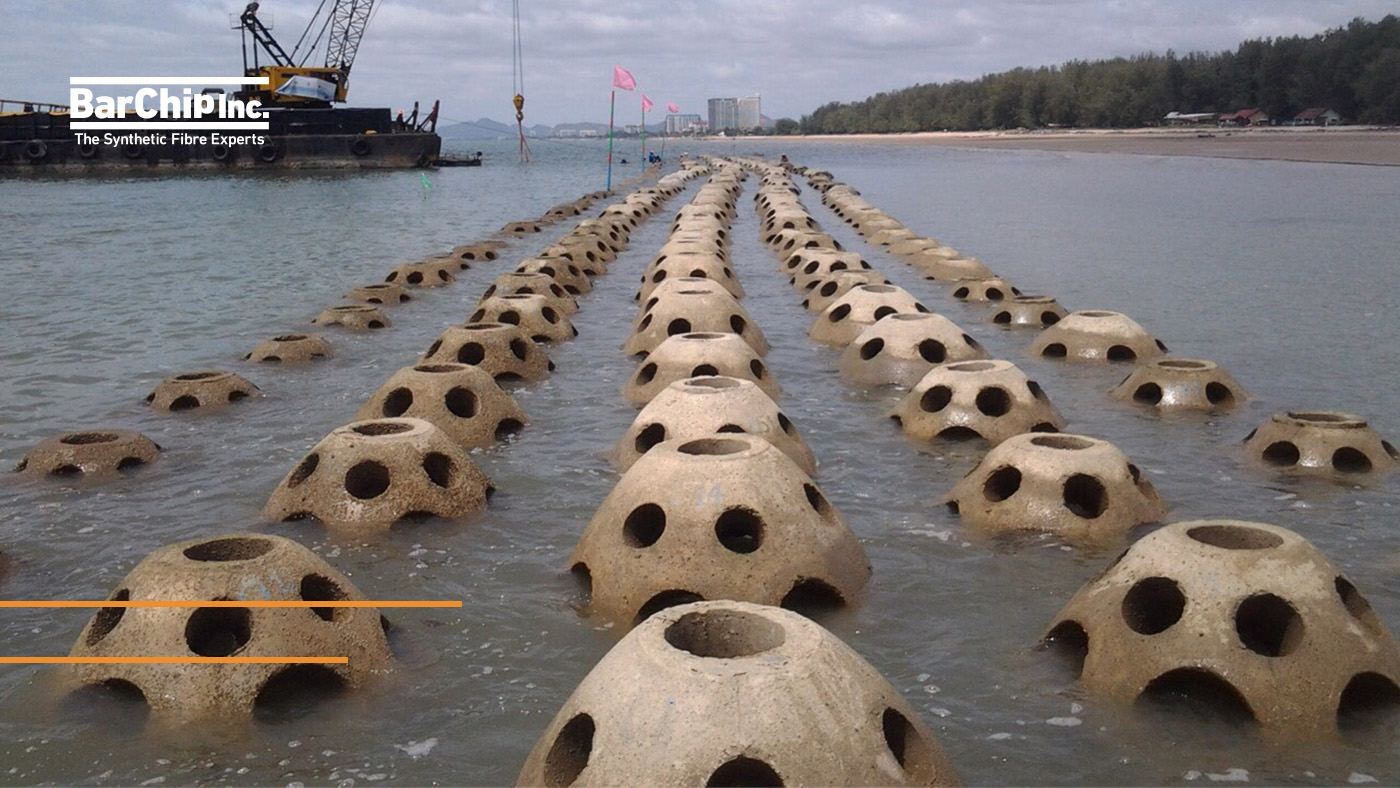
Precast Concrete
Get The BarChip Advantage

Easier to Use
Do you roll out, cut and place steel mesh inside concrete moulds? You don’t have to. BarChip is mixed directly within the concrete, eliminating time consuming and difficult steel processes.

Faster Manufacturing
BarChip eliminates the need to install steel mesh into precast concrete, significantly reducing precast manufacturing times. On some projects, BarChip reduces construction times by as much as 50%.

Low Cost
Compared to mesh steel, fibre reinforced precast concrete has reduced material costs, reduced labour, reduced transport costs, with less element breakage during transportation. All these contribute to significant cost savings.

Corrosion Free
BarChip is corrosion free, eliminating the risk of concrete cancer and other corrosion related durability issues.
Reducing Carbon Through Optimised Precast Concrete Design
Reducing embodied carbon in precast concrete is about more than selecting low carbon materials. Through improved structural design, BarChip macro synthetic fibres can reduce reinforcement requirements, optimise concrete consumption and improve manufacturing efficiency. The projects below demonstrate two approaches to lowering the carbon footprint of precast concrete while maintaining structural performance.
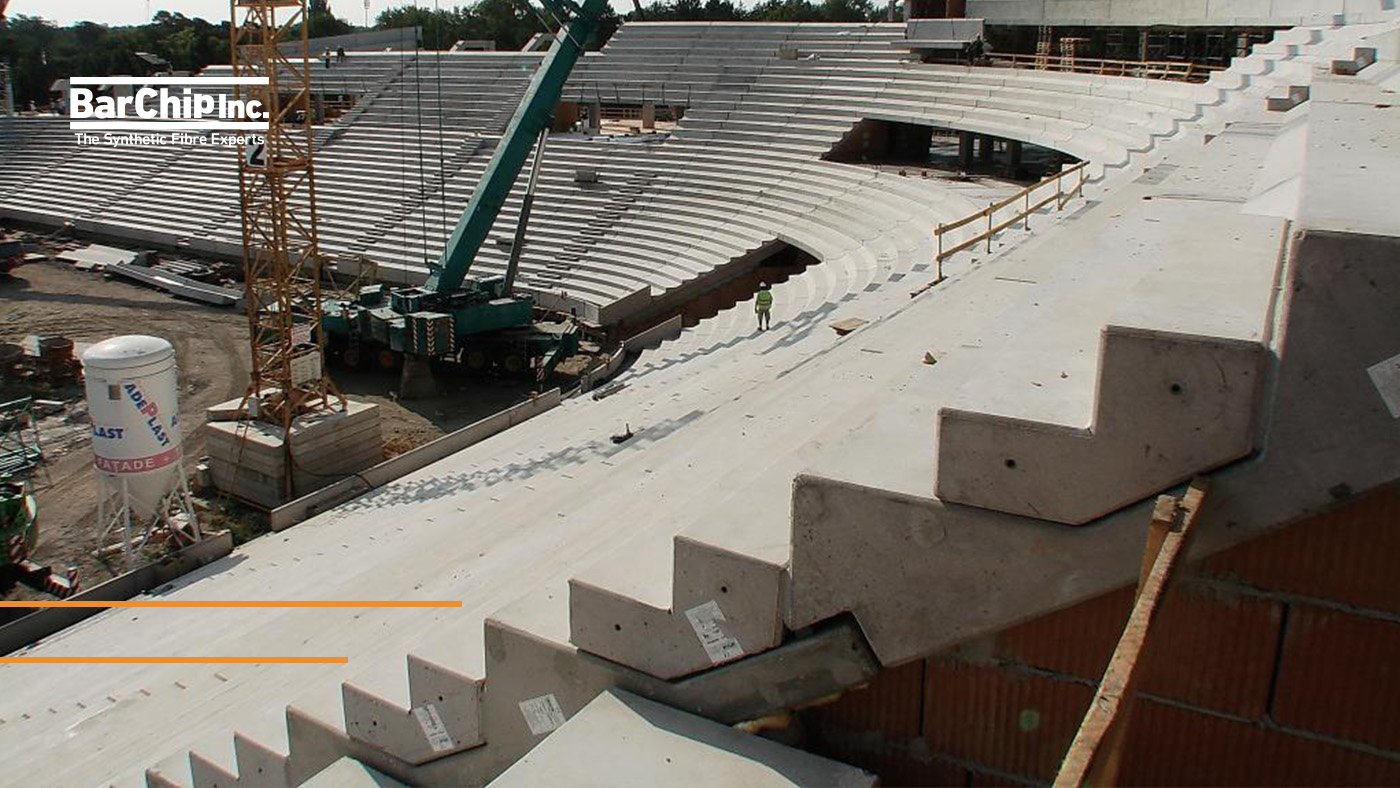
Efficient Material Use
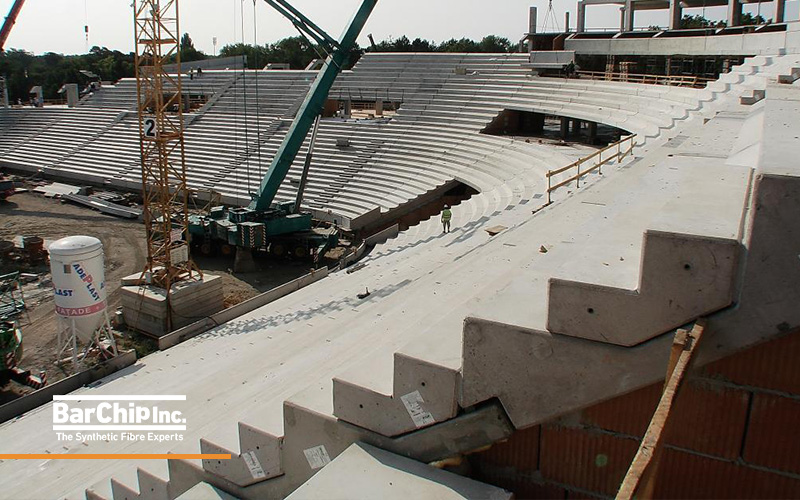
At Debrecen Stadium, finite element optimisation and BarChip 48 reduced slab thickness from 220 mm to 120 mm, eliminating conventional steel stirrups and reducing element weight. The resulting reduction in concrete consumption delivered significant embodied carbon savings while maintaining structural performance.
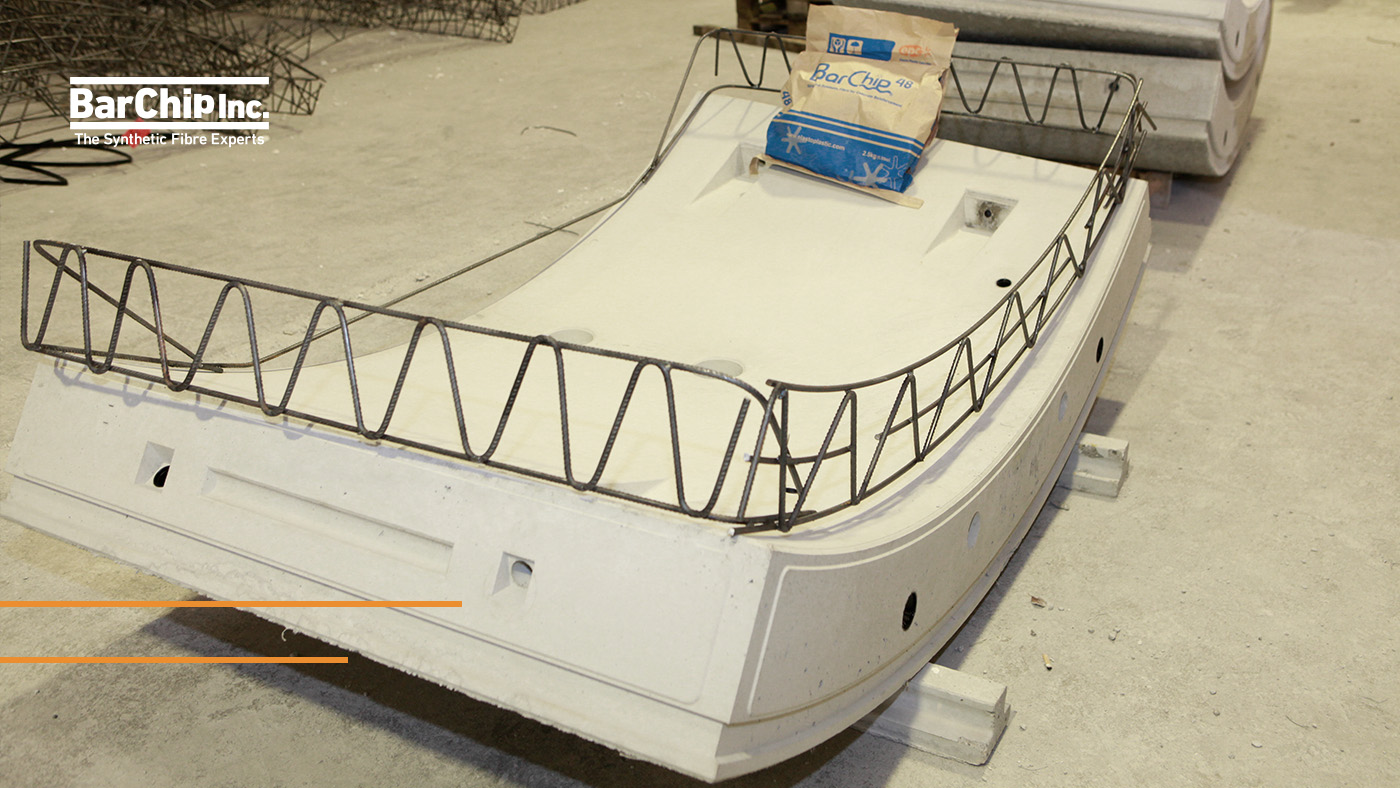
Lower Reinforcement Carbon
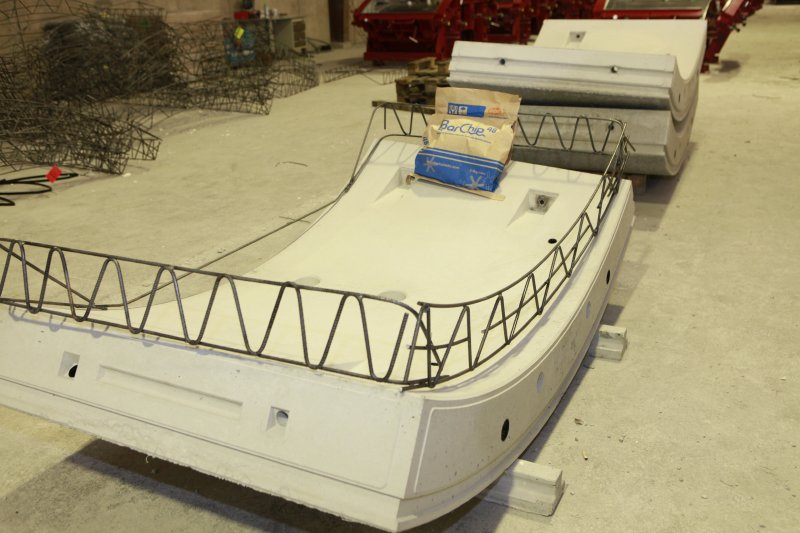
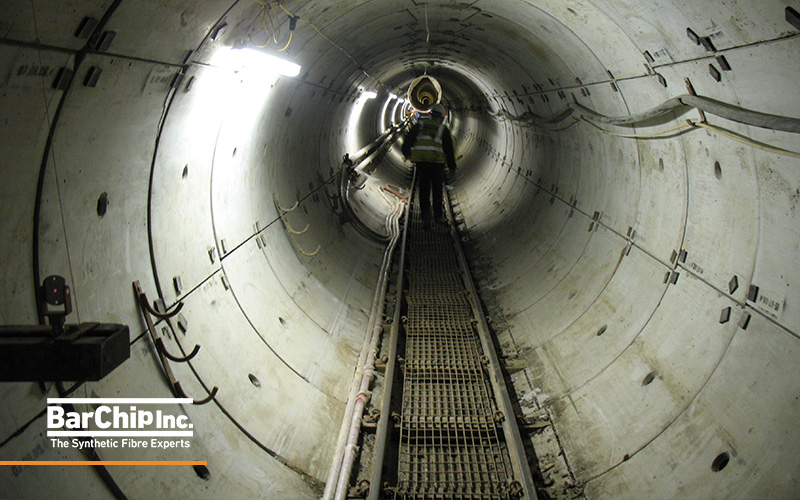
At the Santoña–Laredo water tunnel, BarChip macro synthetic fibres reduced the embodied carbon of the reinforcement system by 76% compared to a conventional steel cage design. The project demonstrates how lower carbon reinforcement can significantly reduce embodied carbon while maintaining structural performance.
Where is Fibre Reinforced Precast Concrete Used?
BarChip fibre reinforced precast concrete is suitable for use in nearly every type of precast concrete, from architectural panels to major infrastructure works and smaller commercial or residential works.
Precast Tunnel
Segments
Invert
Segments
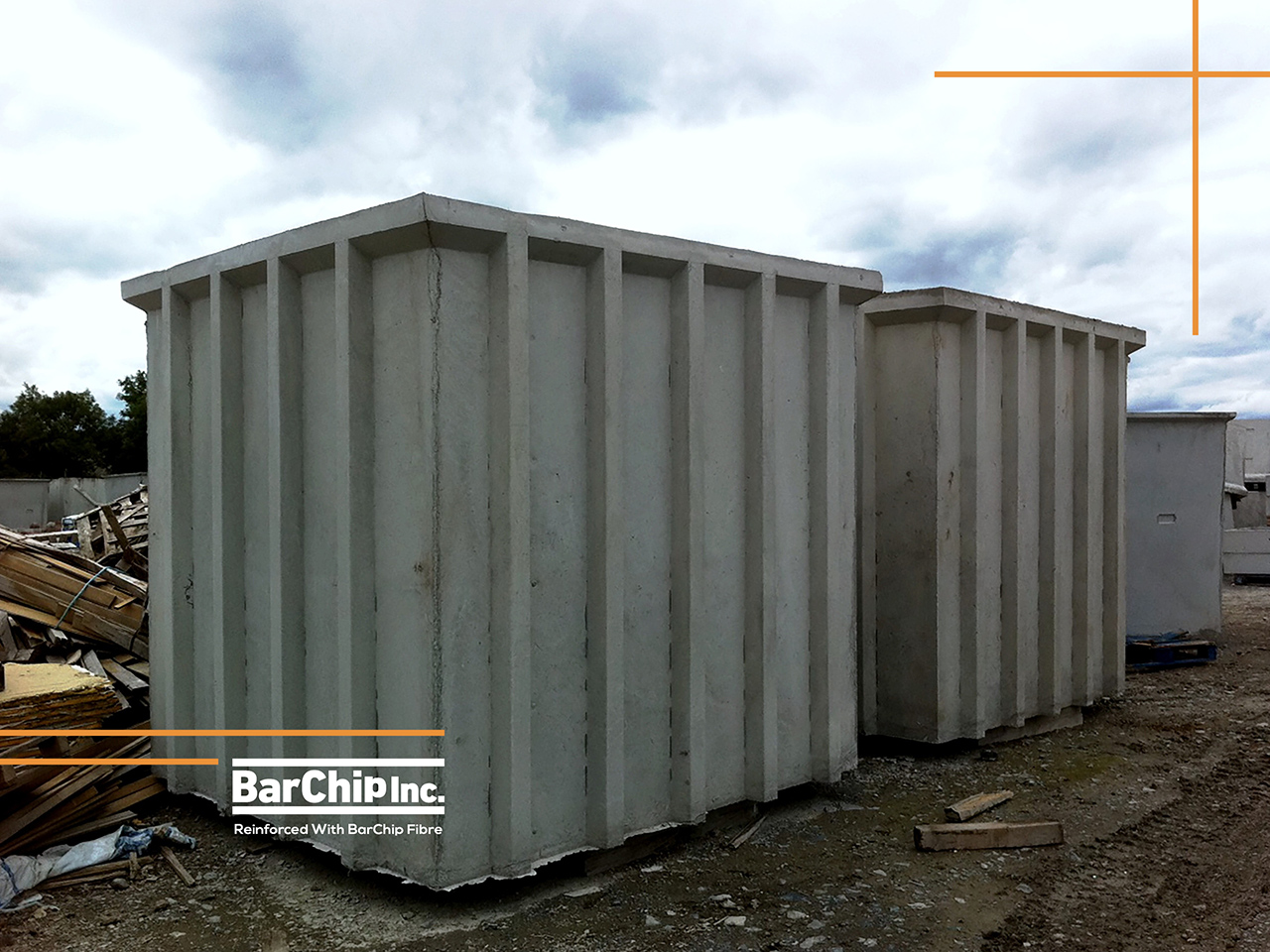
Water and Wastewater Tanks
Septic
Systems
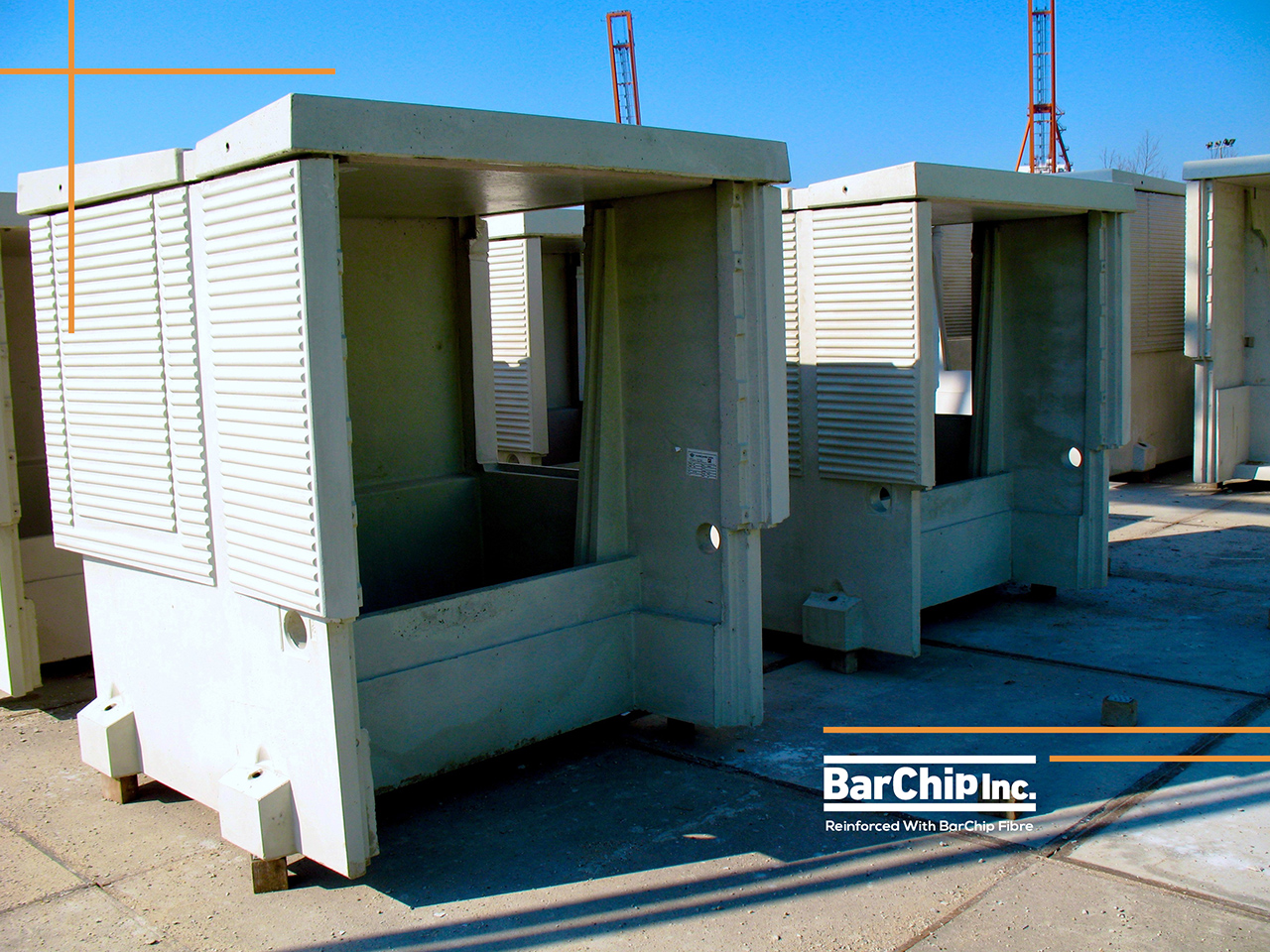
Electrical
Cabinets
Ballast Pads
Burial Vaults
Walls
and Barriers
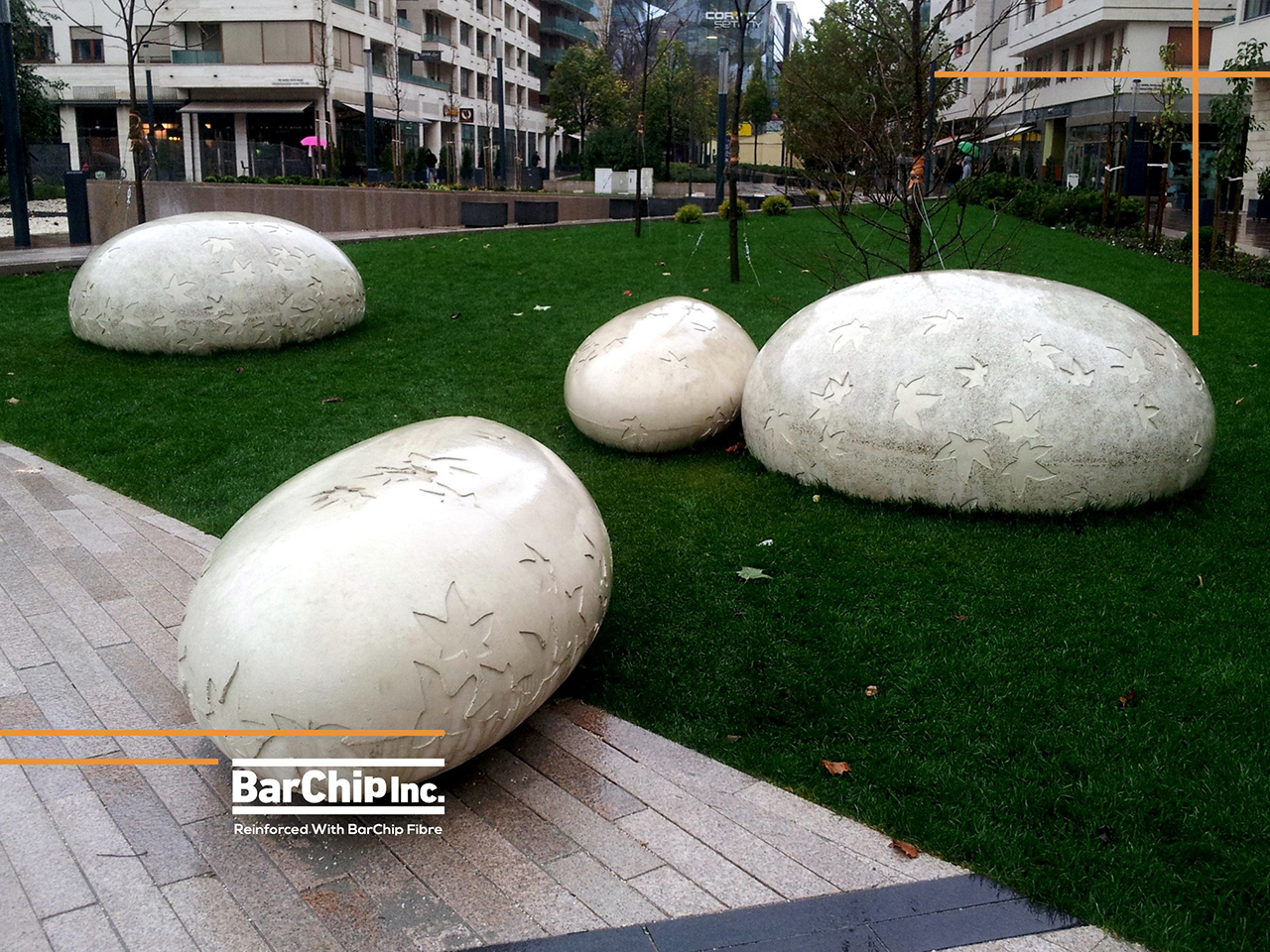
Seating
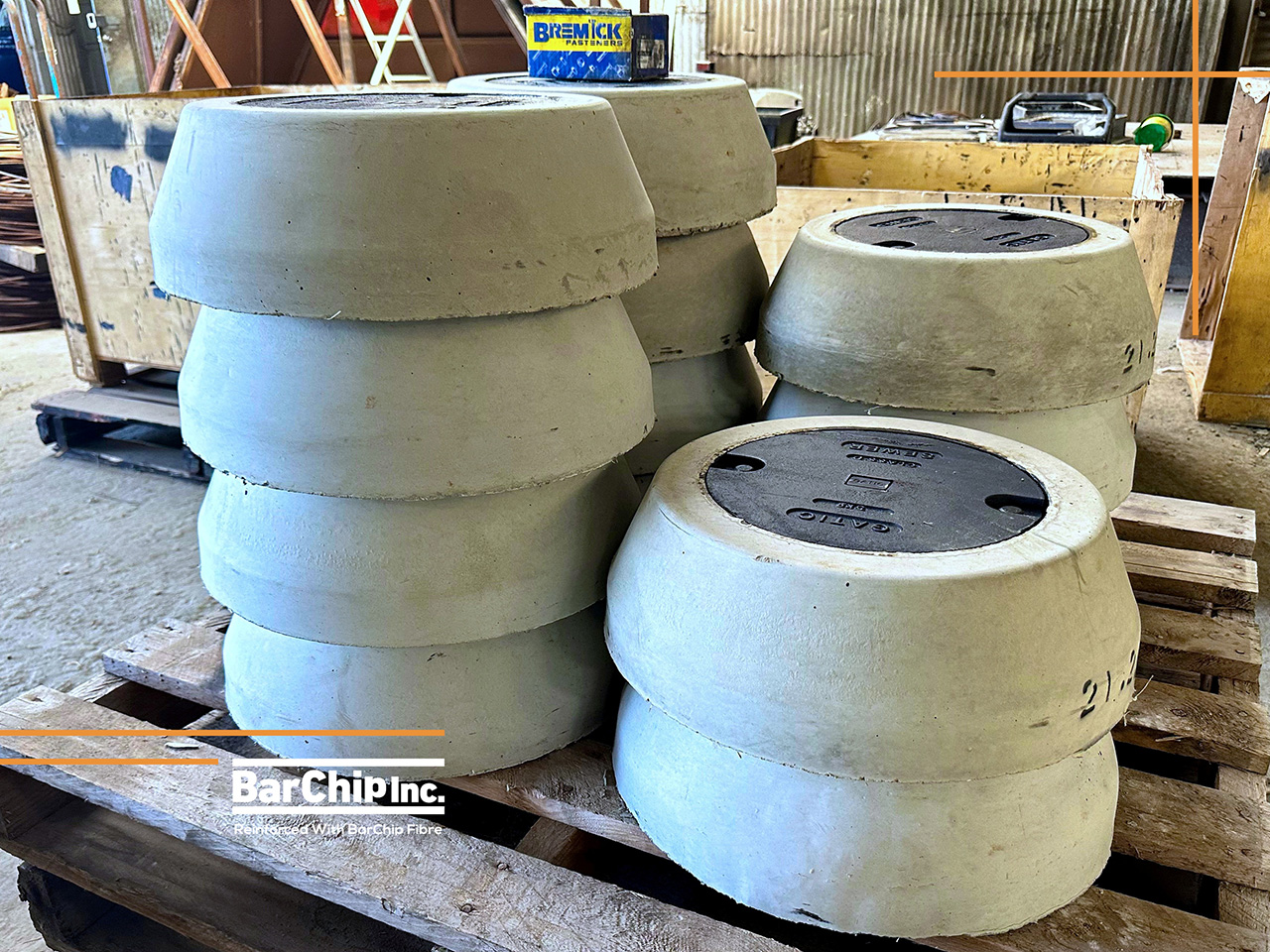
Manholes
Railway
Track Slab
Project Highlight




Frequently Asked Questions
Does fibre reinforcement reduce the cost of precast concrete?
Yes. Fibres eliminate the time required for installation of steel reinforcement, improving production efficiency and significantly reducing labour costs.
Do fibres reduce precast concrete manufacturing times?
Yes. Installing steel reinforcement in precast concrete mould is a physical and time consuming process. By eliminating this step, BarChip saves significant time for precast concrete manufacturers.
Can macro synthetic fibre replace steel reinforcement in precast concrete?
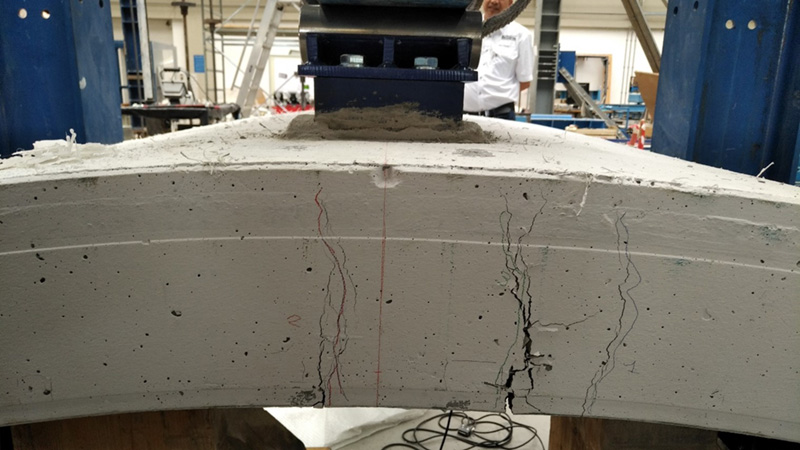
Yes. BarChip fibre increases the post crack residual capacity of concrete. The improved “toughness” allows fibre to replace traditional steel in a wide variety of precast concrete applications.
What types of precast concrete use macro synthetic fibre reinforced concrete?
Almost all precast concrete can incorporate fibre reinforcement. BarChip fibre has been successfully used in a wide range of precast concrete applications, including tunnel segments, concrete pipes, box culverts, water tanks, septic systems, noise barriers, retaining walls, cabinets, pits, troughs and more.
How much fibre is needed to reinforce precast concrete?
BarChip is typically dosed between 3kg and 6kg per cubic metre in precast concrete. Dose rates can increase for very high performance applications like precast tunnel segments.
How is fibre reinforced concrete designed?
Fibre reinforced precast concrete is typically designed according to the post-crack residual capacity of the fibre reinforced concrete. Fibre reinforced concrete design methods may include EN 14651, ASTM C1609, ASTM C1550, Model Code 2010 and application-specific design standards.
What is the minimum thickness for fibre reinforced precast concrete?
BarChip is corrosion free, with no need for minimum concrete cover. As such, the thickness is determined by performance and not durability. BarChip has reinforced precast elements as thin as 20mm.
Why are fibres used in Precast Concrete?
Macro synthetic fibres make precast concrete faster to produce, cheaper and more durable than traditional steel reinforcement.
Get in touch for a personal information session about your next project. One of our concrete fibre experts will guide you through the following 4 keys items: