
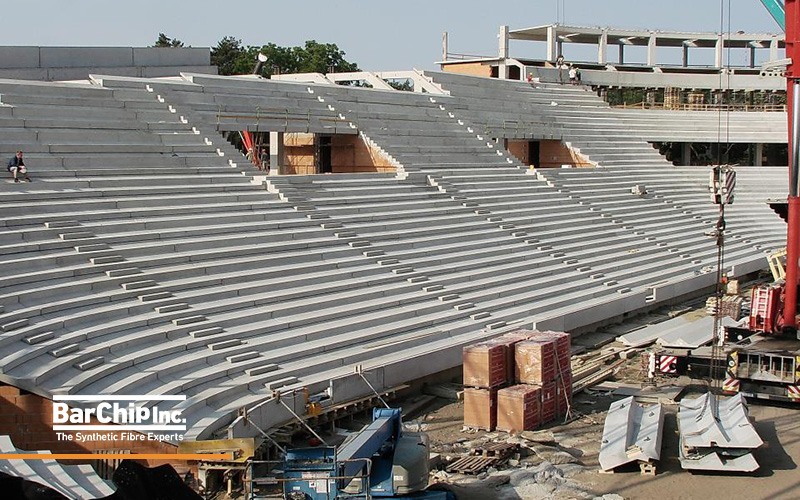
Fibre Reinforced Prestressed Precast Grandstand Elements – Debrecen Stadium, Hungary
The Debrecen Stadium project demonstrated how advanced engineering, finite element modelling and macro synthetic fibre reinforcement can optimise prestressed precast concrete.
Through an extensive programme of laboratory testing, full-scale structural validation and finite element analysis, the original grandstand design was redesigned using prestressed concrete reinforced with BarChip 48 macro synthetic fibres. The optimised solution eliminated conventional stirrups, reduced slab thickness by approximately 45%, lowered element weight and simplified precast manufacturing while maintaining structural performance.
Project Overview
Location: Debrecen, Hungary
Application: Prestressed precast concrete grandstand elements
Product: BarChip48 Macro Synthetic Fibre
Engineering: JKP Static
Research: Budapest University of Technology and Economics
The Challenge
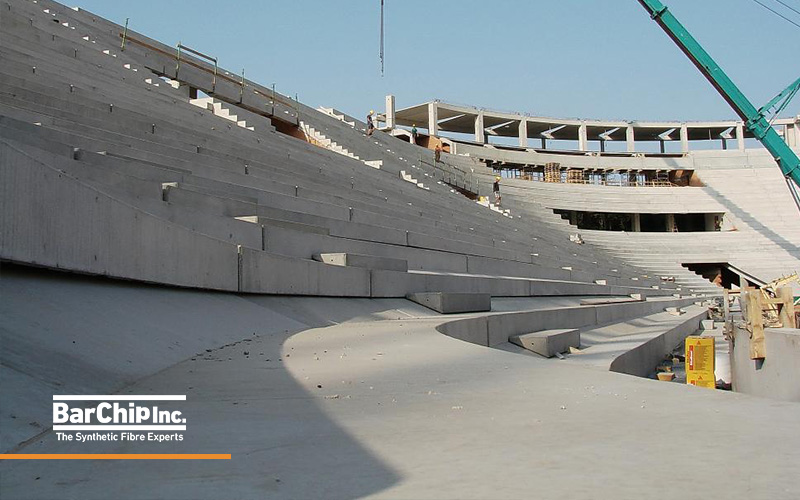
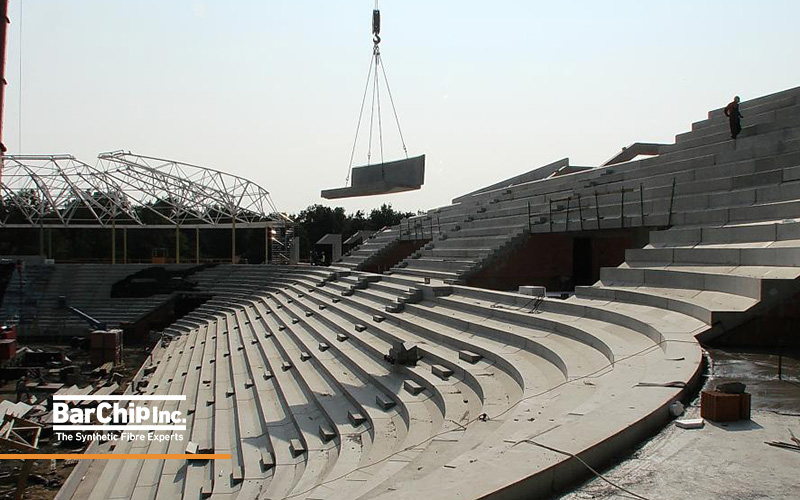
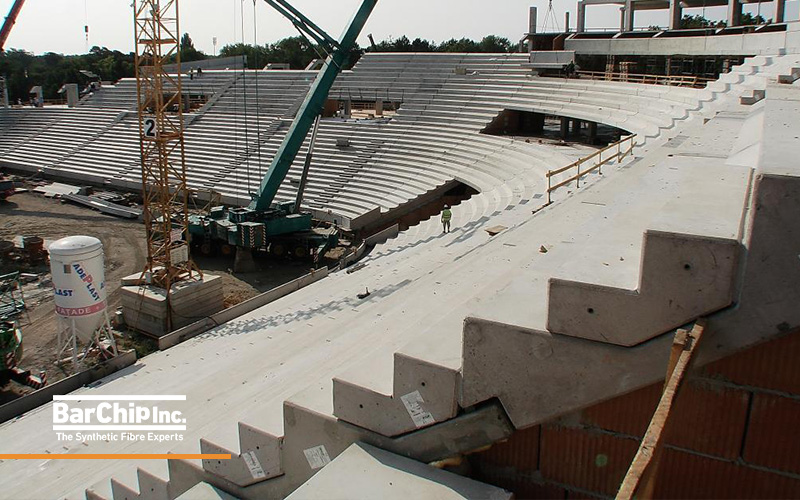
The new Debrecen Stadium required more than 400 unique precast grandstand elements covering approximately 11,000 m² of seating within a tight construction programme and a limited project budget. The structure incorporated 7.5 metre long precast tribune elements, many of which were geometrically unique due to the curved stadium layout.
The original tender design utilised conventional reinforced concrete with a 220 mm thick slab beneath each seating element. While structurally adequate, the resulting element weight, reinforcement complexity and manufacturing effort limited production efficiency and increased material consumption.
The engineering team sought a more efficient prestressed precast solution capable of reducing weight, simplifying manufacture and maintaining structural performance.
Engineering Development
Rather than simply substituting one reinforcement system for another, the project followed a rigorous engineering development programme.
Six commercially available macro synthetic fibres were initially evaluated using RILEM testing procedures. The highest-performing fibres were then subjected to additional testing across multiple fibre dosages ranging from 0 to 10 kg/m³ to establish their post-cracking structural behaviour.
The research formed part of the wider “The Big Crack” investigation undertaken by JKP Static and the Budapest University of Technology and Economics, which examined the structural behaviour of steel, macro synthetic and micro fibre reinforced concrete. The research demonstrated the importance of residual post-cracking performance when designing structural fibre reinforced concrete elements and provided the material properties used for subsequent structural modelling.
Following laboratory evaluation, six full-scale prestressed grandstand elements were manufactured and tested under bending and shear loading. Four incorporated macro synthetic fibres, while two were conventionally reinforced in accordance with Eurocode 2 for direct comparison.
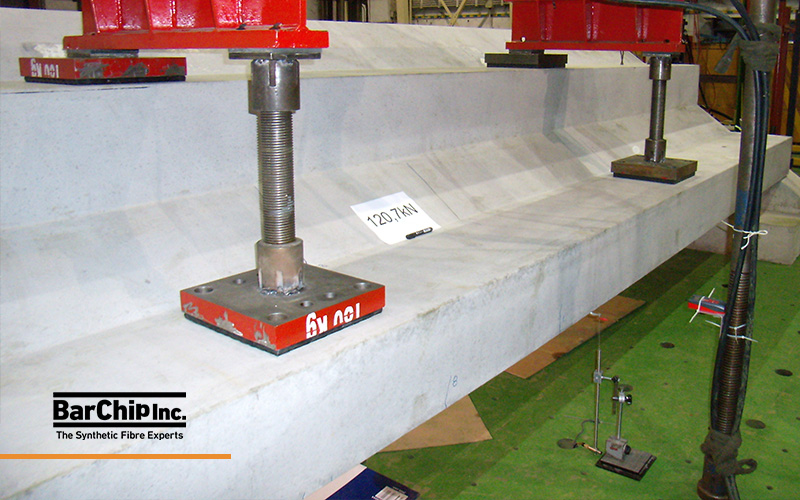
Full-scale testing validated the structural performance of the optimised prestressed precast element prior to construction.
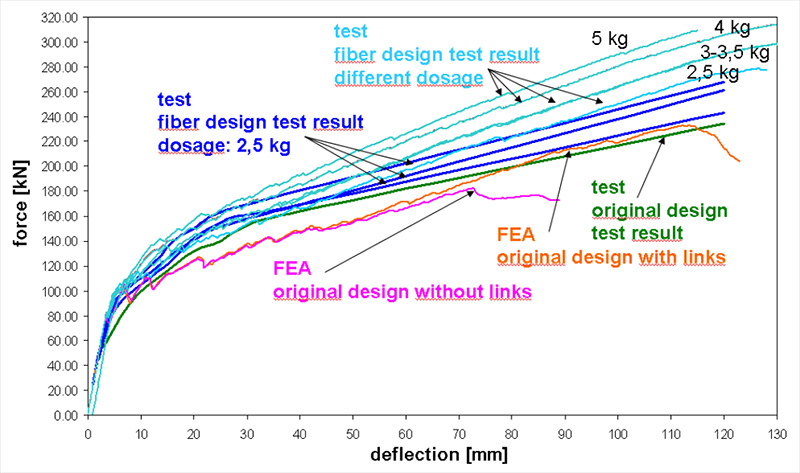
Load-deflection curves from full-scale structural testing comparing conventionally reinforced and BarChip reinforced prestressed precast grandstand elements. The results validated the structural performance of the optimised design and supported finite element model calibration.
Finite Element Validation
Laboratory testing alone was not considered sufficient for final design.
A detailed finite element model was developed and calibrated against the full-scale structural tests, allowing the behaviour of the prestressed fibre reinforced concrete elements to be accurately reproduced under service and ultimate loading conditions.
Once validated, the finite element model was used to determine the minimum fibre dosage required to achieve the required structural performance, optimising both material use and manufacturing efficiency. The validated model allowed the engineering team to optimise fibre dosage and element geometry before production, reducing material use while maintaining the required structural performance.
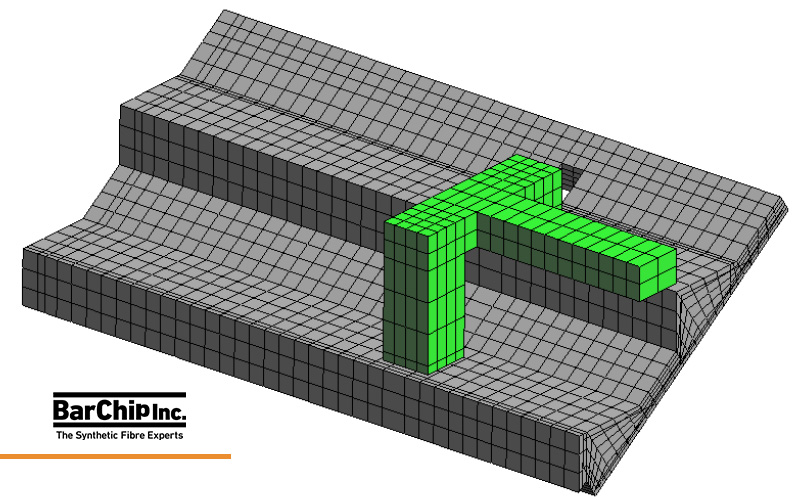
Finite element modelling was calibrated against full-scale testing before finalising the structural design.
Design Optimisation
The engineering programme enabled the original concept to be substantially refined.
| Original Design | Optimised Design |
|---|---|
| 220 mm slab thickness | 120 mm slab thickness |
| Conventional reinforcement | Prestressed concrete with BarChip 48 |
| Steel stirrups | BarChip macro synthetic fibres replacing stirrups |
| Higher concrete volume | Approximately 45% reduction in slab thickness |
| Heavier elements | Reduced element weight |
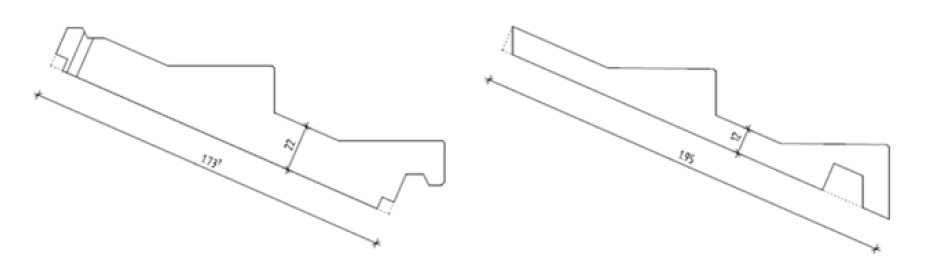
Engineering optimisation reduced slab thickness from 220 mm to 120 mm while eliminating conventional steel stirrups.
Prestressing strands provided the primary flexural reinforcement, while BarChip macro synthetic fibres replaced conventional shear stirrups. Prestressing also contributed to increased shear resistance, enabling the structural optimisation of the final section.
Manufacturing Benefits
The optimised design delivered significant advantages for precast production.
By eliminating conventional stirrups, reinforcement preparation became substantially simpler, reducing labour requirements during mould assembly and minimising reinforcement congestion within the relatively thin precast sections.
The reduction in slab thickness also lowered concrete consumption and reduced individual element weight, improving handling, transportation and installation efficiency while supporting the project’s demanding construction schedule.
Sustainability Outcomes
Although the project was driven by structural efficiency rather than sustainability targets, the engineering optimisation delivered several environmental benefits.
Reducing slab thickness from 220 mm to 120 mm significantly decreased concrete consumption across more than 400 precast elements. The elimination of conventional stirrups further reduced steel usage while simplifying manufacturing operations.
The resulting reduction in material consumption, transport weight and production effort contributed to a lower embodied carbon footprint compared with the original design, demonstrating how structural optimisation can also improve sustainability outcomes.
Sustainability Outcomes
Although the project was driven by structural efficiency rather than sustainability targets, the engineering optimisation delivered several environmental benefits.
Reducing slab thickness from 220 mm to 120 mm significantly decreased concrete consumption across more than 400 precast elements. The elimination of conventional stirrups further reduced steel usage while simplifying manufacturing operations.
The resulting reduction in material consumption, transport weight and production effort contributed to a lower embodied carbon footprint compared with the original design, demonstrating how structural optimisation can also improve sustainability outcomes.
Research-Proven Performance
The Debrecen Stadium project represents one of the earliest examples of macro synthetic fibres being successfully incorporated into prestressed precast concrete through a fully validated engineering process. The final design was supported by:
- Comparative laboratory testing of six macro synthetic fibres
- Material characterisation across multiple fibre dosages
- Full-scale bending and shear testing
- Finite element model calibration
- Published peer-reviewed conference research
This combination of experimental testing and numerical analysis provided the engineering confidence required to replace conventional stirrups while maintaining structural performance in a demanding prestressed precast application.
Project Outcomes
- Approximately 45% reduction in slab thickness (220 mm to 120 mm)
- Conventional steel stirrups eliminated
- Reduced precast element weight
- Lower concrete consumption
- Simplified reinforcement and mould preparation
- Improved manufacturing efficiency
- Full-scale structural validation completed
- Finite element analysis calibrated against laboratory testing
- Published engineering research supporting the design methodology
Download the Engineering Research
Learn how laboratory testing, full-scale structural validation and finite element modelling were used to optimise the prestressed precast grandstand elements for Debrecen Stadium by downloading the published engineering papers.

Precast, Prestressed Grandstand of PFRC in Stadium, Hungary (2013)
Conference paper describing the laboratory testing, full-scale validation, finite element analysis and structural optimisation of the Debrecen Stadium prestressed precast grandstand elements.
The Big Crack – Steel, Synthetic Macro and Micro Fibre Reinforced Beams Research (2012)
Comparative research undertaken by the Budapest University of Technology and Economics evaluating the structural performance of steel, macro synthetic and micro fibre reinforced concrete beams. The results formed the basis for selecting the BarChip fibre used in the Debrecen Stadium project.