
Fibre Reinforced Concrete Track Slab
BarChip Fibre Eliminates Steel fom Concrete Track Slab

What is Fibre Reinforced Concrete Track Slab?
Fibre reinforced concrete track slab is a ballastless rail track system where the rail is laid on a continuously reinforced concrete slab rather than traditional ballast. Concrete track slab design is ideal for high-speed rail, metro, elevated rail and light rail systems, providing a stable, durable and low-maintenance solution for modern rail infrastructure.
BarChip is at the forefront of concrete track slab innovation. Our macro synthetic fibre reinforcement replaces traditional steel reinforcement within concrete track slab, simplifying construction while delivering proven durability, lower embodied carbon and long term performance.
Fibre Reinforced Concrete Track Slab – The BarChip Advantage
By replacing traditional steel reinforcement, BarChip macro synthetic fibre delivers greater design and construction efficiency for modern rail infrastructure.

Faster Construction

Low Carbon

Reduced Costs

Reduced Current Leakage

Increased Durability

Construction Efficiency
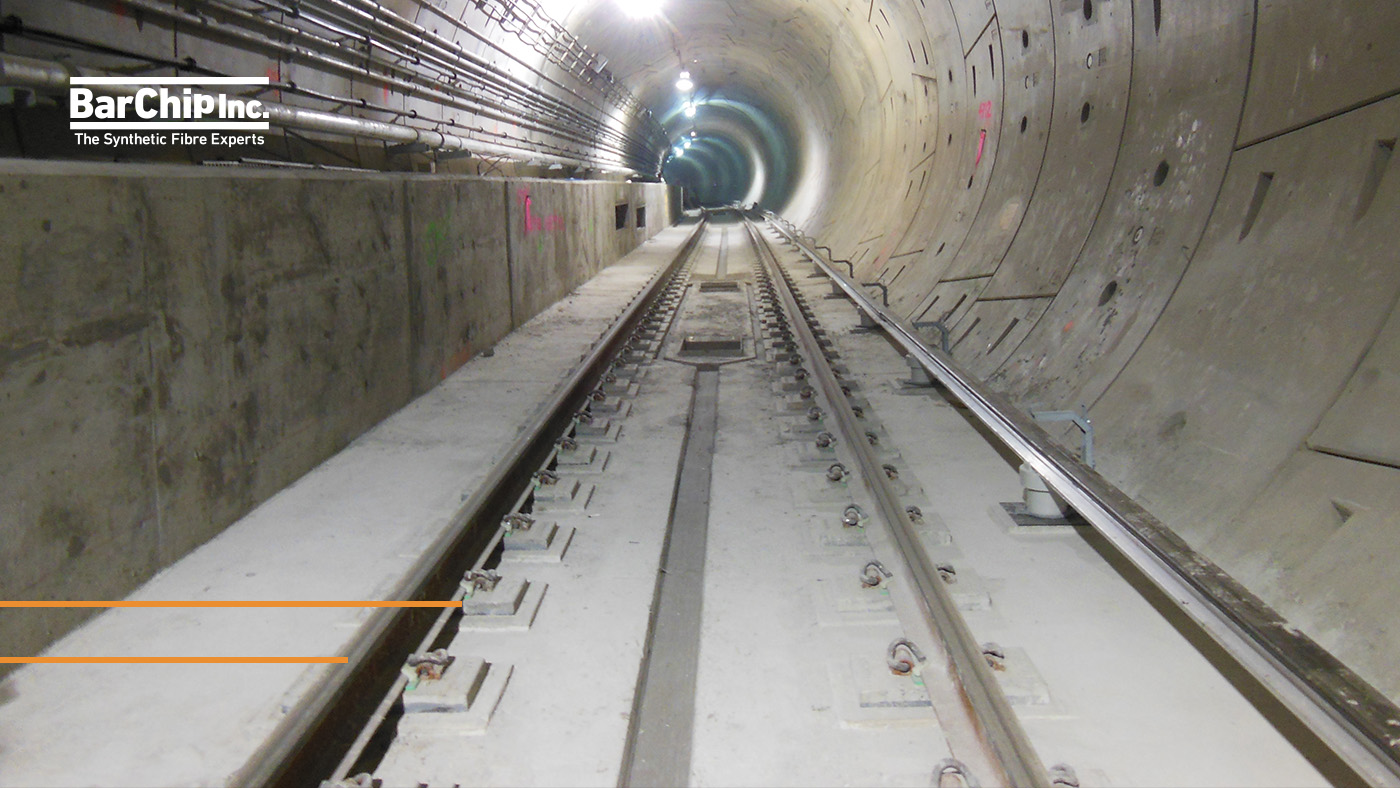
Designed for a 120-year service life, the Forrestfield–Airport Link utilised a BarChip fibre reinforced concrete track slab, with concrete successfully pumped a world record 2 km from the surface to its final placement within the tunnel.

BarChip Reinforced Concrete Track Slab Projects
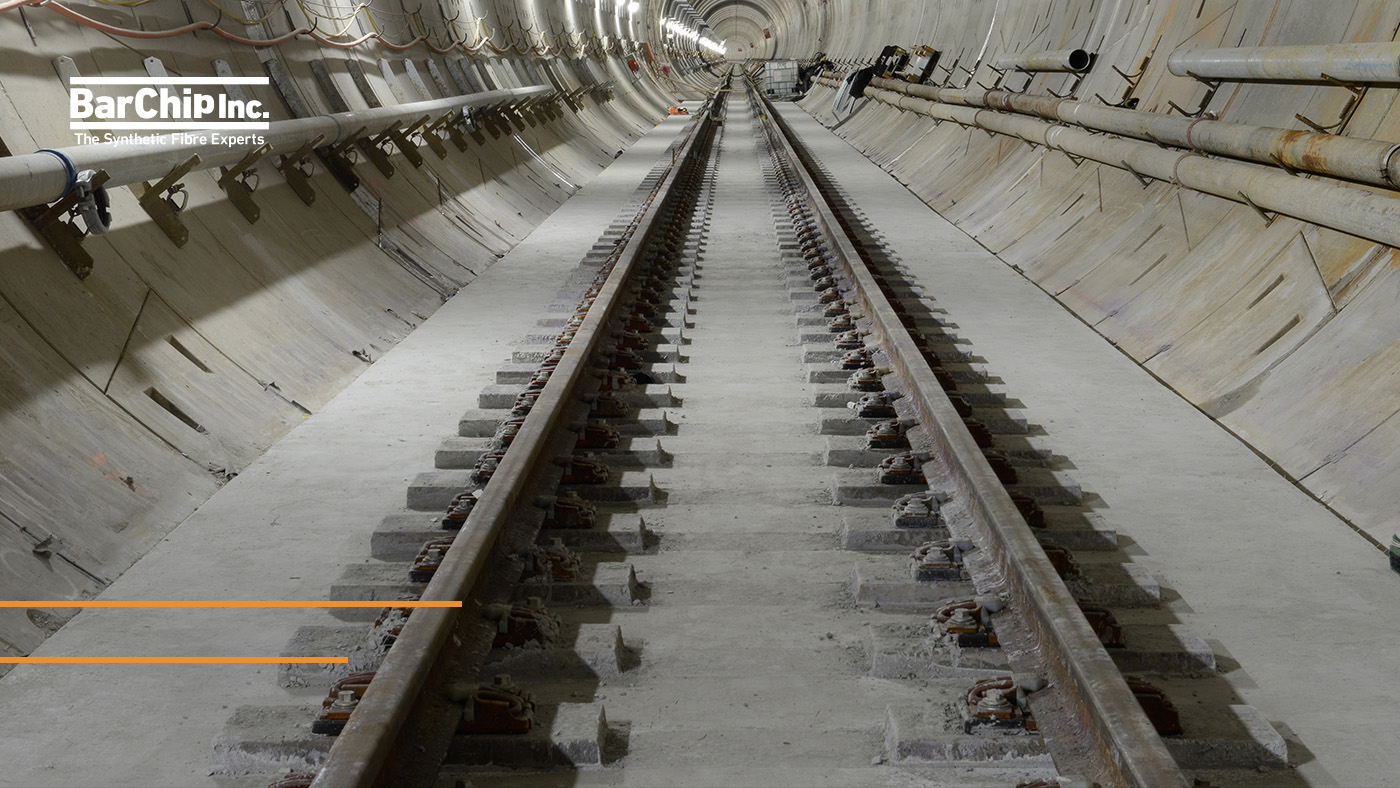
5 kg/m3 of BarChip delivered the same performance as 55 kg of steel fibre.
Heard Enough?
Let’s Talk About Your Track Slab Project
Talk to our team about your next concrete track slab project. From concept design through to construction, we help project teams optimise reinforcement to improve design efficiency, construction efficiency and long-term project performance.
Fibre Reinforced Concrete Track Slab Design
Traditionally, railway construction has used a bottom-up construction method. Rail track has been laid on previously built ballast material which provides a relatively stiff bearing surface that’s able to transfer the train load through to the ground below.
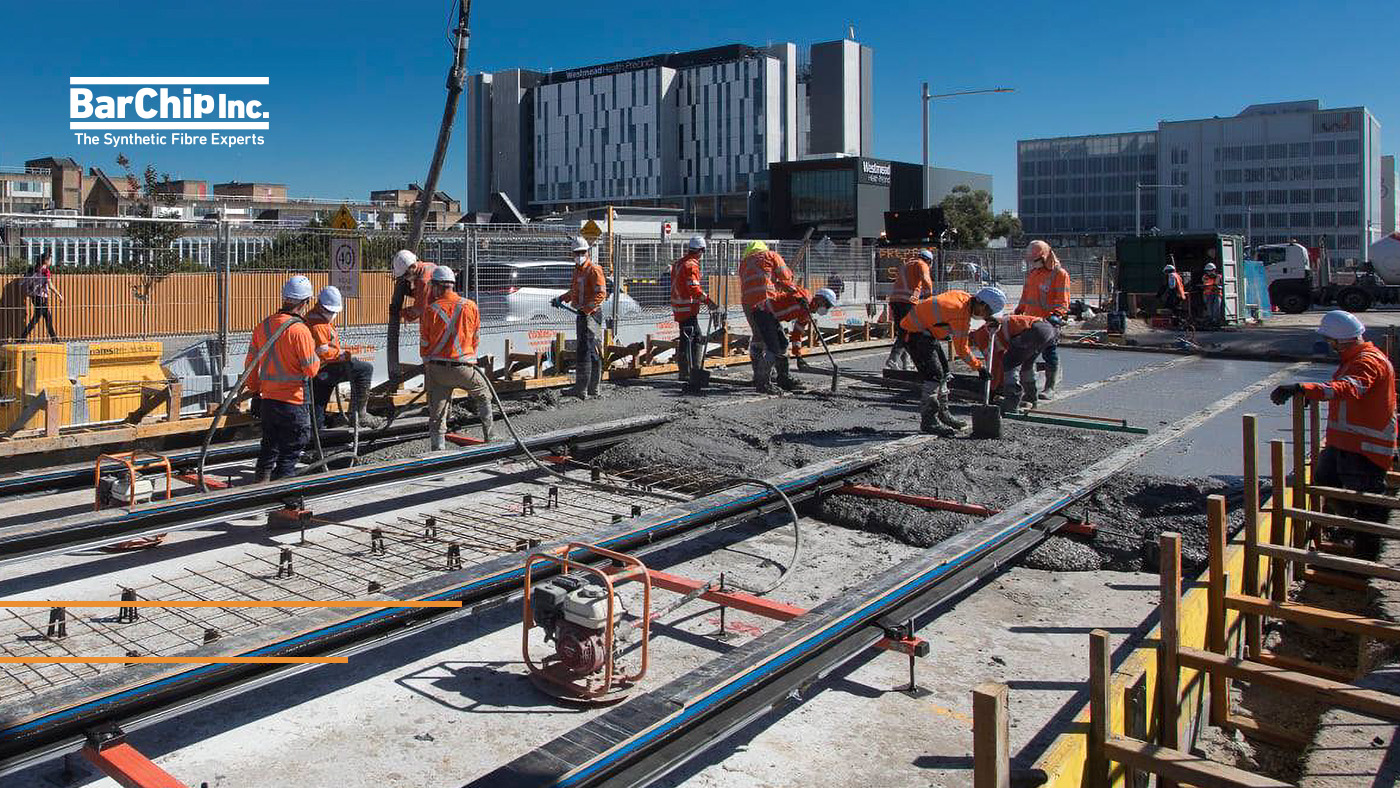
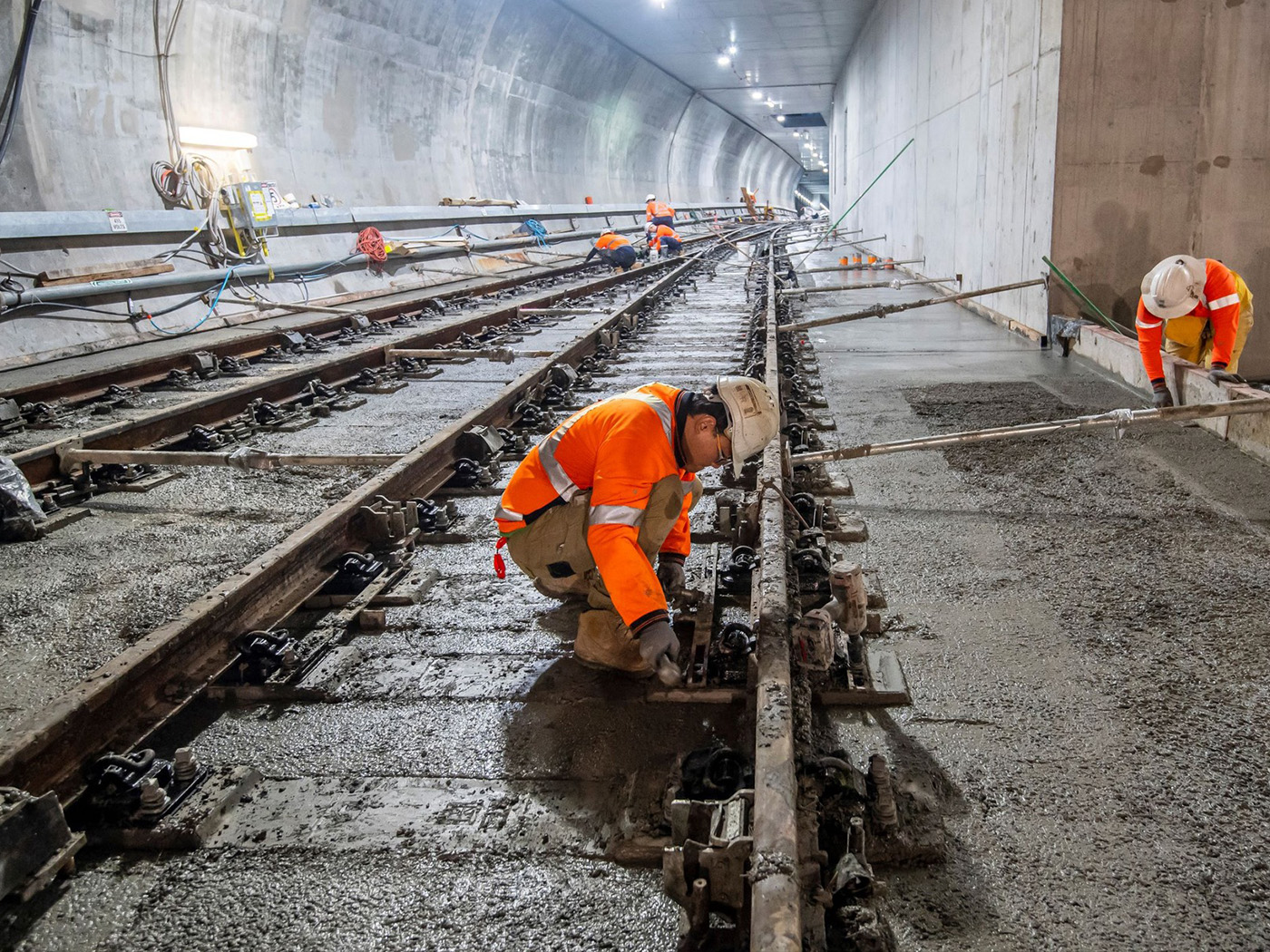
In the concrete track slab design method, rail tracks are installed on top of a sub-base at their final location. Following this, the installed rails are encapsulated with concrete to hold them in place.
Installing steel reinforcement between the rails and sub-base, and placing bars at close centres in such a confined environment is awkward, tedious and time consuming to say the least. BarChip fibre eliminates these issues, providing construction efficiency, durability and an easier construction process.
BarChip Track Slab Designs are Fully Supported by Finite Element Analysis
BarChip track slab designs are fully supported by Finite Element Analysis (FEA). Backed by more than 10 years of testing and numerical modelling, BarChip is the only synthetic fibre incorporated into the ATENA material library, enabling engineers to accurately simulate structural behaviour, crack development and long-term performance.
This proven engineering capability enables designers to optimise concrete track slab designs with greater confidence, improving performance, construction efficiency and material utilisation. With FEA, you get:


Low Carbon Concrete Track Slab
Independent project verification demonstrates how BarChip macro synthetic fibre can significantly reduce the embodied carbon of concrete track slab construction.
On the Sydney Metro City & Southwest project, approximately 1,900 tonnes of reinforcing steel was replaced with around 200 tonnes of BarChip macro synthetic fibre, reducing embodied carbon by more than 3,000 tCO₂e and delivering a 44% reduction compared with conventional steel reinforcement. These outcomes contributed to the project’s Leading Infrastructure Sustainability (IS) rating.
Together with independently verified Environmental Product Declarations (EPDs), these outcomes demonstrate how BarChip contributes to lower carbon rail infrastructure.

Where is Fibre Reinforced Concrete Track Slab Used?
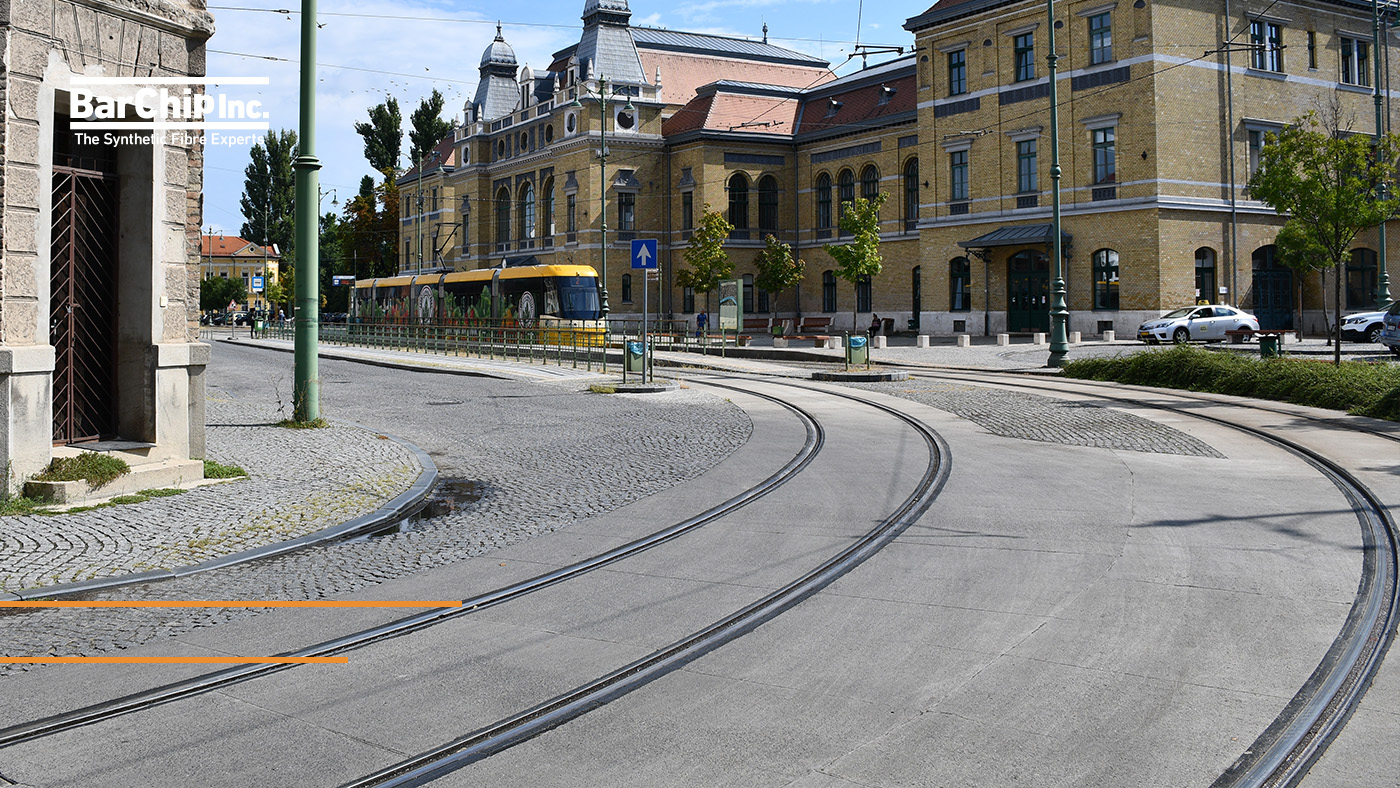
Fibre reinforced concrete track slab is increasingly used as an alternative to ballasted rail track design, particularly for high-speed rail and metro tunnels. It’s also commonplace in light rail and electrified tramway construction, where the rail corridor is shared by road traffic and the rail is embedded into the concrete track slab. BarChip can be used in:
Frequently Asked Questions
What is concrete track slab?
Concrete track slab is a rigid reinforced concrete base that supports railway tracks, providing improved stability, durability and lower maintenance compared with traditional ballasted track.
What is a ballastless track slab?
A ballastless track slab is a railway system that replaces traditional ballast with a reinforced concrete slab, providing greater stability, lower maintenance and a longer service life.
Can fibres replace traditional steel in concrete track slab?
Yes, macro synthetic fibres can replace traditional steel reinforcement in concrete track slabs, offering equivalent structural performance with benefits such as reduced corrosion and easier installation.
How is fibre reinforced concrete track slab designed?
Fibre reinforced concrete track slab is typically designed using advanced finite element analysis (FEA) supported by laboratory testing to verify static, dynamic and fatigue performance. BarChip material models have been incorporated into leading FEA software to optimise concrete track slab designs while meeting the required structural and serviceability criteria.
Where is fibre reinforced concrete track slab used?
Fibre reinforced concrete track slabs are used in high-speed rail, metro systems, light rail, tramways and elevated rail.
What are the benefits of fibre reinforced track slab?
Macro synthetic fibres can reduce construction time and labour, improve crack control, eliminate corrosion and reduce the risk of stray current leakage compared with conventional steel reinforcement.
Do fibres lower the carbon footprint of concrete track slab?
Yes. Replacing conventional steel reinforcement with macro synthetic fibre can significantly reduce the embodied carbon of concrete track slab while maintaining structural performance.
What types of concrete track slab use fibres?
BarChip fibre reinforced concrete is used in embedded rail, direct fixation systems, floating slabs, resilient baseplates, precast track slabs, cast-in sleepers and booted sleepers.
Get in touch for a personal information session about your next project. One of our concrete fibre experts will guide you through the following 4 keys items:


