
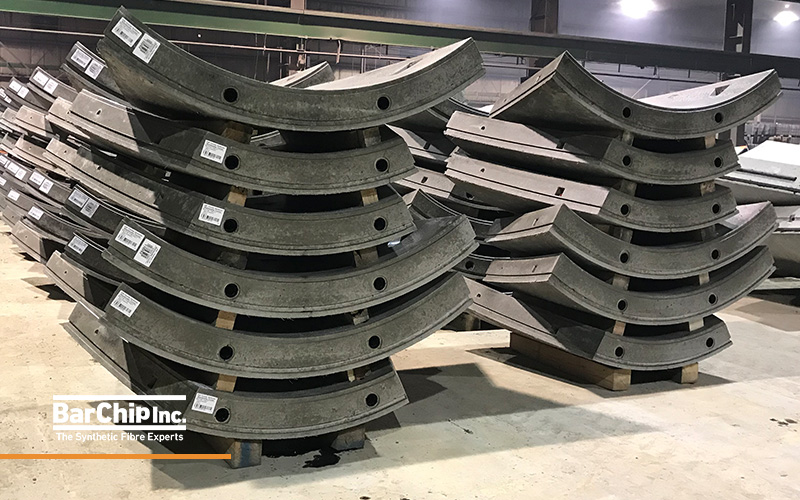
BarChip Macro Synthetic Fibre Reinforced Tunnel Segments
In a North American first, the Blacksnake Creek Stormwater Separation Tunnel was constructed using fibre reinforced tunnel segments, with BarChip 48 macro synthetic fibres providing the sole structural reinforcement.
The project demonstrated how BarChip 48 could replace traditional steel reinforcement while delivering the structural performance required for mechanised TBM tunnel construction.
Project: Blacksnake Creek Stormwater Separation Project
Application: Precast Concrete Tunnel Segments
Owner: City of St. Joseph, Missouri
Designer: Black and Veatch Corporation
Contractor: Super Excavators, Inc
Segment Manufacturer: CSI Tunnel Systems
Product: BarChip 48 Macro Synthetic Fibre
To meet regulatory requirements of the Environmental Protection Agency and the Missouri Department of Natural Resources, the City of St. Joseph, Missouri separated and redirected a portion of the stormwater runoff from the Blacksnake Creek watershed to a dedicated outfall near the Missouri River. A key element of the project was the Blacksnake Creek Stormwater Separation Tunnel.
The completed tunnel system reduces the volume of untreated wastewater released by up to 60%, with future works expected to increase this to 85%. It also eliminates the cost of treating up to 2 million gallons of creek water per day at the wastewater treatment plant.
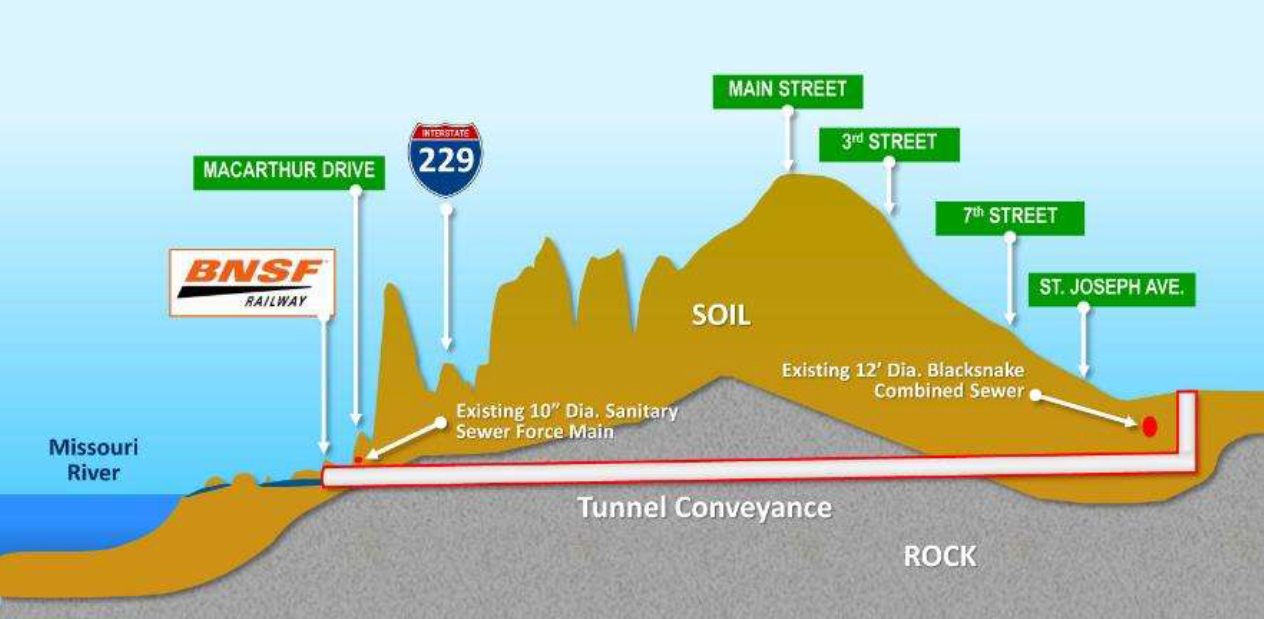
Blacksnake Creek Tunnel
- 2.0 km (1.3 miles) long
- 2.75 m (9 ft) internal diameter
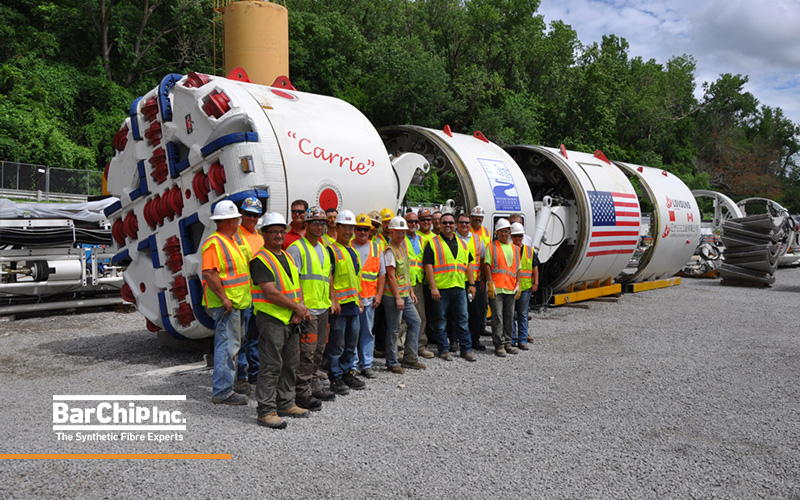
- Excavated using an EPB tunnel boring machine
- 16 m (53 ft) dual baffle drop shaft with 11 m (37 ft) internal diameter
- Constructed in soft and mixed ground including soils and shale
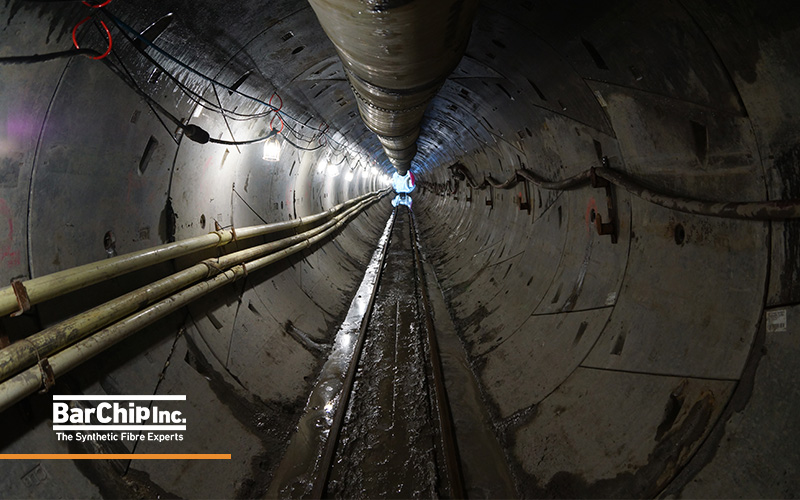
- Ground support comprised of 100% BarChip macro synthetic fibre reinforced precast tunnel segments
Blacksnake Creek Tunnel Construction
The tunnel alignment runs west from the Drop Shaft and proceeds underneath populated areas, crossing below Interstate 229 and in-service railroad tracks before terminating at a new Energy Dissipation Structure.
The tunnel geology is soft ground and mixed ground conditions, including soils and shale, and combinations of both at interfaces. Considering the ground conditions along the tunnel alignment and the proximity of the drop shaft to commercial and residential areas, excavation with an EPB tunnel boring machine was required.
To launch the TBM a 16 m diameter secant pile shaft with a cradle placed inside was constructed. A special electrical and hydraulic umbilical assembly was designed to help launch the TBM. During this stage, a precast concrete segmental tunnel liner “half-ring” of BarChip fibre reinforced segments was used to push and advance the TBM further into the excavation.
Fibre Reinforced Precast Tunnel Segments
The segmental lining is made of precast concrete segments installed by the TBM during advancement. Each ring comprises six trapezoidal segments fitted with rubber gaskets to provide a watertight lining.
Segment dimensions are 190.5 mm (7.5 inches) thick and 1219.2 mm (48 inches) wide, with an internal diameter of 2.7 m (9 feet). The segments were manufactured by CSI Tunnel Systems in Macedonia, Ohio using C40/50 concrete with a stripping strength of 14 MPa.
BarChip macro synthetic fibre was selected as the sole structural reinforcement for the tunnel segments. While this represented the first application of its type in North America, BarChip had previously been used on major US tunnelling projects including the Caldecott Fourth Bore, Devils Slide and the Euclid Creek CSO starter and exit tunnels.
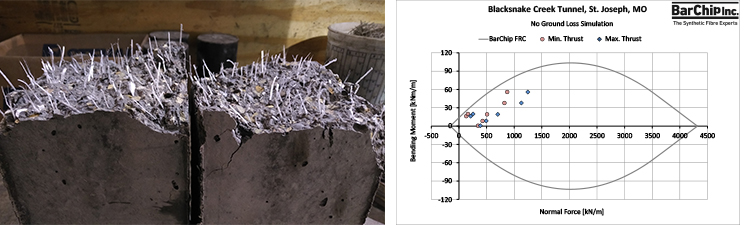
Beam testing and segment interaction modelling used to validate fibre reinforced concrete tunnel segment performance.
Based on previous experience with BarChip on the Euclid Creek CSO Tunnel, CSI Tunnel Systems were confident using macro synthetic fibre reinforcement for the Blacksnake Creek project.
The segments were placed using a mechanical segment erector located within the trailing shield before being manually bolted together. Backfill and contact grouting were completed through cast-in grout ports after installation.
There were no objections to the use of BarChip macro synthetic fibre provided the segments achieved the specified performance requirements, including:
- Minimum compressive strength: 41.4 MPa (6,000 psi)
- Minimum flexural tensile strength at 28 days: 4.62 MPa (670 psi)
- Minimum residual flexural tensile strength: 3.17 MPa (460 psi)
Throughout manufacture, transport, storage and TBM installation, the fibre reinforced segments demonstrated the robustness required for mechanised tunnel construction while satisfying the project’s structural performance requirements.
Tunnelling works were successfully completed in late 2019.
Further Reading
BarChip Blacksnake Creek Tunnel Brochure.

New Advancement in Durable Segments for Combined Sewer Overflow Tunnels, USA, WTC2019 Proceedings for the complete design methodology, structural analysis and project findings.