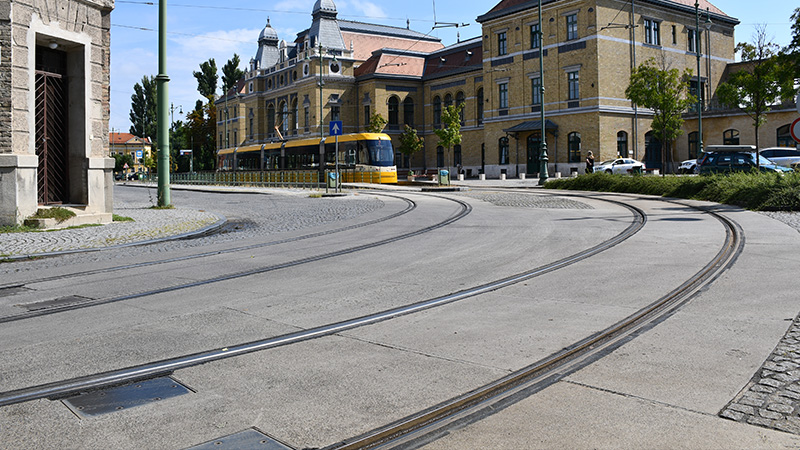
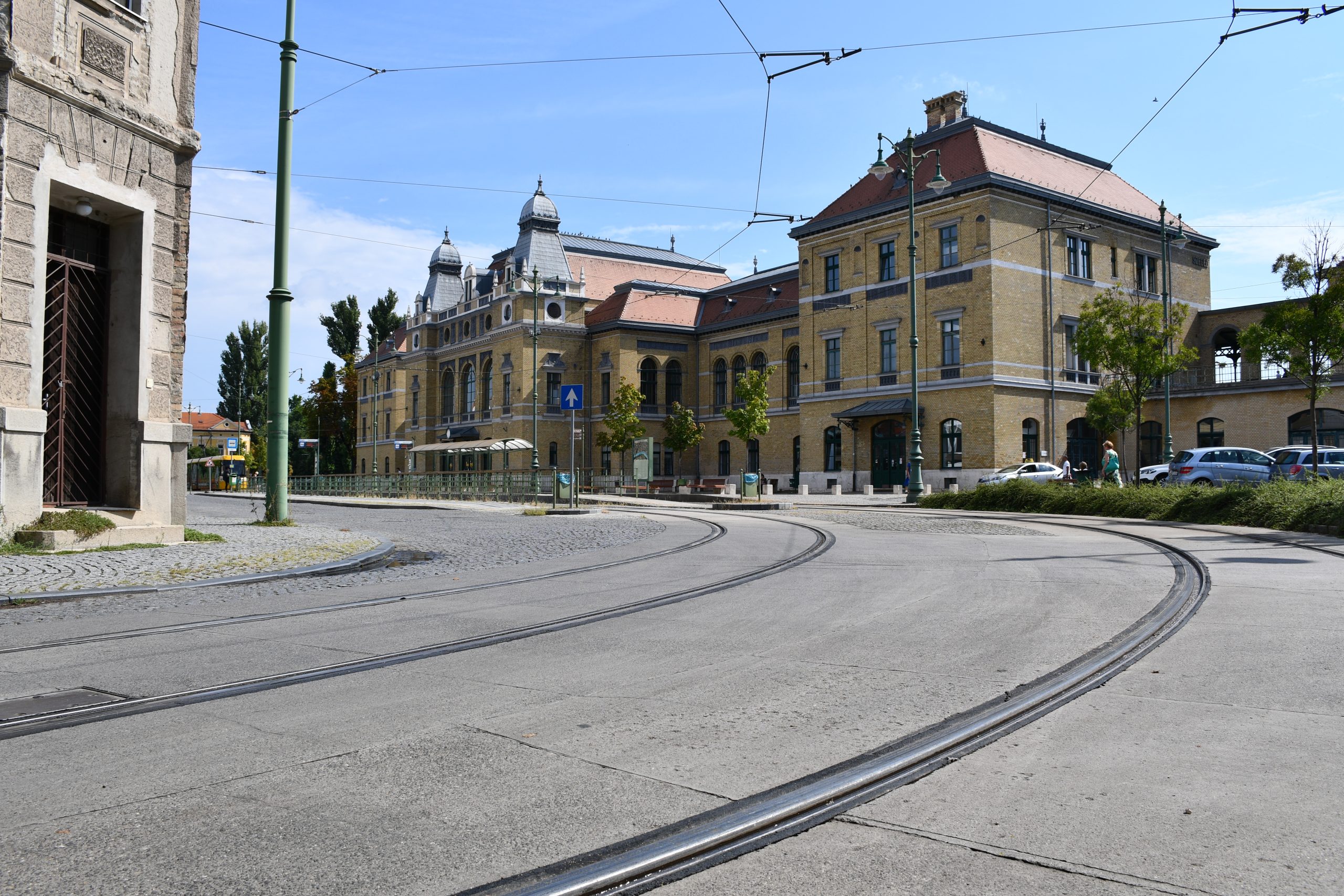
Szeged Electrified Light Rail – Fibre Reinforced Concrete Tram Line
Hungary’s First Cast-in-Place Macro Synthetic Fibre Reinforced Concrete Tram Line
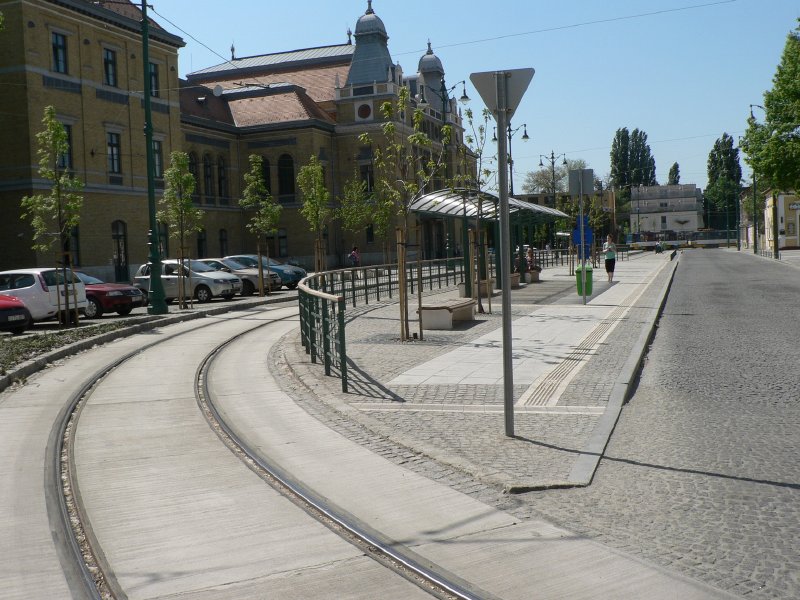
Completed in 2011, the Szeged Electrified Light Rail project involved the rehabilitation of 18.3 km of existing tram track and the construction of 4.8 km of new track as part of a €100 million upgrade to the city’s tram network.
Owner: Hungarian Government (Ministry of Construction and Transport)
Operator: SZKT (Szeged Transport Company)
Contractors: STRABAG, Swietelsky Vasúttechnika, Belfry PE, Homlok Építő
Designers: TRENECON COWI, FŐMTERV, UTIBER, JKP Static
Application: Light Rail Concrete Tram Line
Reinforcement: BarChip 48 Macro Synthetic Fibre
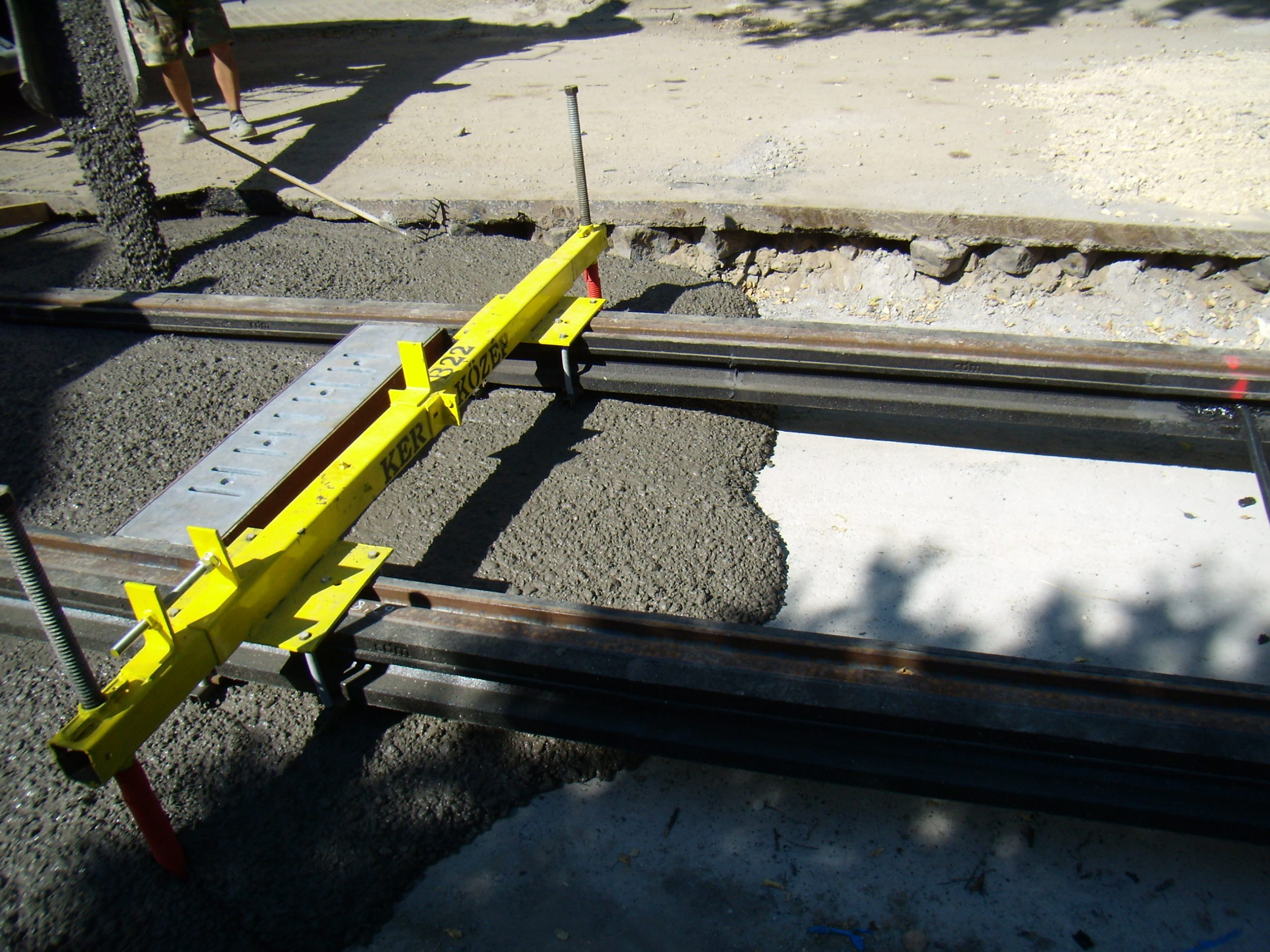
Engineering a Fibre Reinforced Concrete Tram Line
The Szeged tram network was originally designed using a conventional rail pad system. During the design process, however, concerns relating to durability, stray current, construction efficiency and lifecycle costs prompted the project team to investigate an alternative reinforcement solution.
Initially considered only for electrically isolated sections where conventional steel reinforcement could not be used, macro synthetic fibre reinforcement proved capable of replacing traditional reinforcement throughout the track slab. Following technical and financial evaluation, the project team adopted a BarChip fibre reinforced concrete tram line, creating the first cast-in-place macro synthetic fibre reinforced concrete tram line in Hungary.
Comparative Testing and Design Validation
Before construction, an extensive testing programme was undertaken at the Budapest University of Technology and Economics to evaluate the structural performance of commercially available macro synthetic fibres. BarChip 48 demonstrated the highest residual performance of the fibres assessed, with testing showing that 5 kg/m³ of BarChip 48 delivered equivalent structural performance to approximately 55 kg/m³ of steel fibre for the project requirements.
These results provided the engineering basis for the project, enabling JKP Static to develop and validate the fibre reinforced concrete tram line using both analytical design methods and advanced finite element analysis (FEA). The resulting design eliminated conventional steel reinforcement while satisfying the required structural performance, durability and design life of the track slab.
Finite Element Design Optimisation
JKP Static developed the structural design using advanced finite element analysis (FEA), incorporating material models derived from the laboratory testing programme to accurately represent the behaviour of BarChip 48 within the concrete track slab. The analysis evaluated static, dynamic and fatigue loading conditions, allowing the reinforcement to be optimised while verifying compliance with the required strength, serviceability and design life requirements.
The validated design eliminated conventional steel reinforcement without compromising structural performance, while improving durability, simplifying construction and eliminating the risk of reinforcement corrosion caused by stray current.
Proven Performance After More Than a Decade
Approximately ten years after construction, the fibre reinforced concrete tram line was inspected by SZKT. Dr Nemeth Zoltan Adam, Chief of Public Transport and Railway Safety, commented:
“The fibre reinforced track slab has performed very well, with no issues found on review.”
The success of the Szeged project contributed to the development of design guidance by JKP Static and demonstrated that macro synthetic fibre reinforced concrete could successfully replace conventional reinforcement in modern tram infrastructure. Similar design principles have since been adopted on tram and metro projects throughout Europe and internationally, including Sydney Metro, New York Metro, Brisbane Metro, Parramatta Light Rail and others.