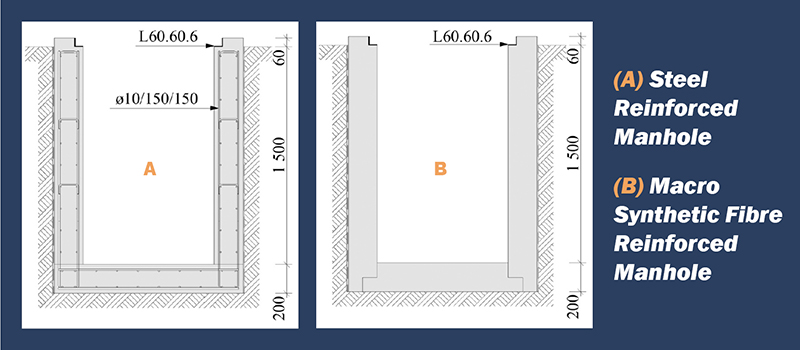
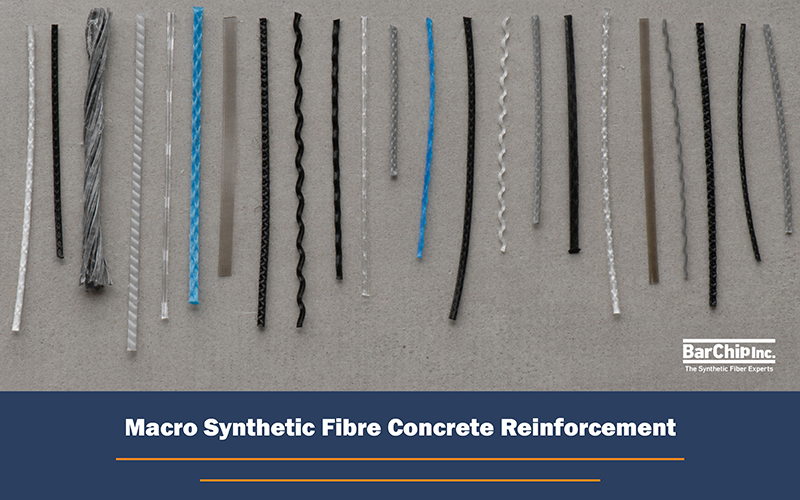
What is Macro Synthetic Fibre Concrete Reinforcement?
Macro synthetic fibre concrete reinforcement (MSF) is a system of short, discrete fibres used as a modern alternative to traditional steel reinforcement in concrete. They are designed to improve the durability and post-crack performance by providing residual strength to the concrete.
Synthetic fibres are generally classified into two categories: micro fibres and macro fibres. The American Society for Testing and Materials defines macro synthetic fibres as structural fibres, typically greater than 0.3 mm in diameter, that provide post-crack residual strength to concrete.
Macro synthetic fibres can be manufactured from a range of synthetic materials, including polyolefins, nylon, PVA, polyacrylics, aramids and their blends. In practice, polypropylene and polyethylene fibres are most widely used due to their consistent performance and proven resistance to the alkaline environment in concrete.
Unlike steel mesh or reinforcing bars, macro synthetic fibres are non-corrosive. This eliminates the risk of reinforcement corrosion, which is one of the primary causes of cracking, spalling and long term durability issues in conventionally or steel fibre reinforced concrete.
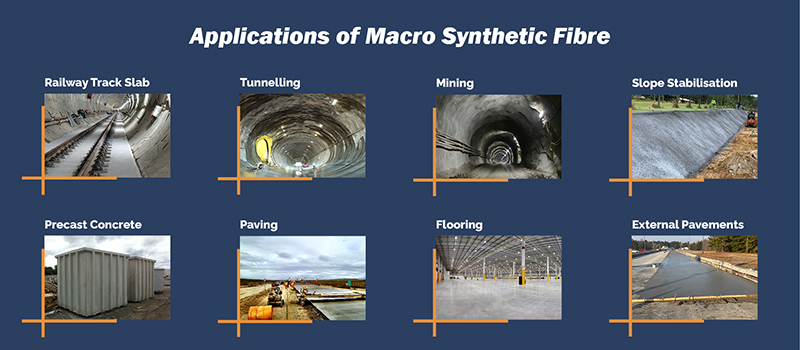
Macro synthetic fibres are widely used in applications such as industrial flooring, shotcrete, precast concrete, pavements and railway track slabs.
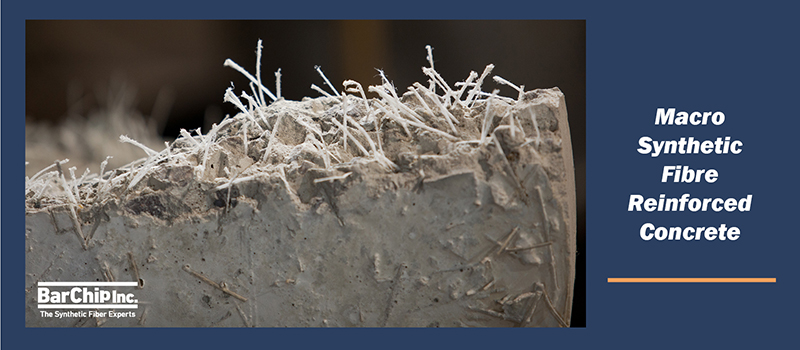
What is Macro Synthetic Fibre Reinforced Concrete (MSFRC)?
Macro synthetic fibre reinforced concrete (MSFRC) is a type of fibre reinforced concrete in which macro synthetic fibres are used as the primary form of reinforcement. While steel mesh and bar are installed prior to concrete placement, macro synthetic fibres are added to concrete at the mixing stage and placed simultaneously with the concrete. These fibres:
- Reinforce concrete in all directions (3D reinforcement)
- Provide post-crack residual strength
- Improve toughness and ductility
- Control crack widths and propagation
Unlike micro fibres, which are used for plastic shrinkage control only, macro synthetic fibres are structural reinforcement capable of replacing steel mesh or steel fibres in many concrete applications.
How Does Macro Synthetic Fibre Reinforcement Work?
Compared to traditional steel reinforcement, which is placed within concrete on a single 2-dimensional plane, macro synthetic fibres are evenly distributed throughout the entire concrete matrix and provides a true 3-dimensional reinforcement system.
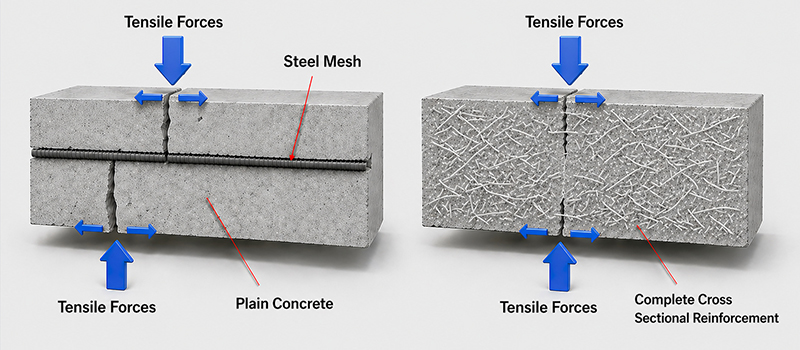
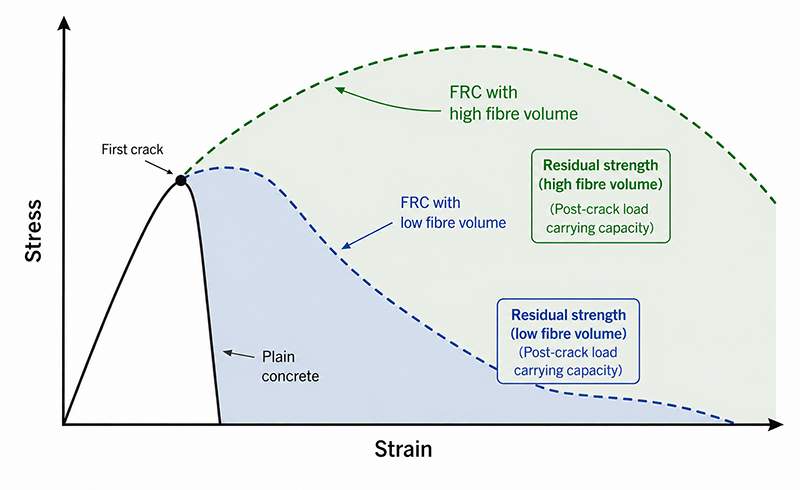
Macro synthetic fibres reinforce concrete by bridging cracks as they form. At early stages, fibres help control the formation of microcracks within the concrete matrix. As loading increases and cracks begin to propagate, the fibres act across the crack faces, transferring tensile stresses and limiting crack growth. As cracks widen:
- Fibres continue to bridge the crack
- Crack propagation is restrained
- Load is redistributed through the fibre network
The performance of macro synthetic fibres is governed by their interaction with the surrounding concrete. Rather than breaking, fibres are designed to undergo controlled pull-out from the matrix. This pull-out behaviour provides a gradual transfer of stress, allowing the concrete to maintain load-carrying capacity after cracking.
This mechanism is known as post-crack residual strength and is a key design parameter in fibre reinforced concrete.
Types of Macro Synthetic Fibres
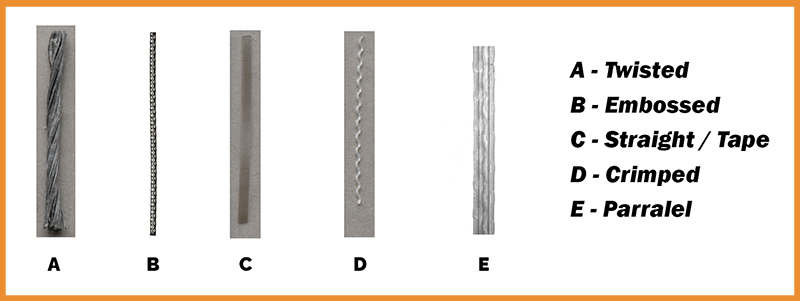
Macro synthetic fibres are manufactured in a range of geometries and surface profiles, each of which can affect mixing, finishing and performance properties. The most common types of macro synthetic fibre include:
Embossed Fibres: Embossed fibres feature a textured surface pattern along their length, creating a strong mechanical interlock with the cement matrix.
Crimped Fibres: Crimped fibres have a wave-like profile that provides mechanical anchorage within the concrete.
Straight / Tape Fibres: Straight (or tape) fibres have a flat, linear profile and rely primarily on surface friction for bond. Historically, these fibres have been more difficult to mix within the concrete.
Twisted Fibres: Twisted fibres are formed by twisting strands along their length which separate during concrete mixing.
Parallel Fibres: Parallel fibres consist of multiple filaments aligned in parallel and lightly bonded along their length. During mixing, these filaments separate and disperse throughout the concrete.
BarChip MQ58 is a parallel fibre designed to deliver both plastic shrinkage crack control and post-crack residual strength.
Properties of Macro Synthetic Fibre Reinforcement
While the properties of fibres can influence the performance of an individual fibre, fibre properties alone should not be used to compare the performance between fibre types. Key properties include:
Fibre Length: Fibre length governs effective anchorage and can influence where peak performance occurs (at low or high deflection). It also affects pumpability, with longer fibres generally being more difficult to pump.
Decitex (Linear Density): Decitex (dtex) is a measure of fibre mass per unit length (grams per 10,000 metres) and influences the number of fibres per kilogram.
Tensile Strength (MPa): Tensile strength defines the maximum stress a fibre can withstand before failure.
Modulus of Elasticity (GPa): The modulus of elasticity determines the stiffness of the fibre.
Surface Geometry: The shape and surface profile of the fibre (e.g. embossed, crimped, twisted).
Material Composition: The fibre material (e.g. polypropylene, polyethylene, nylon) influences durability in concrete, surface finishing and post-crack residual performance.
Benefits of Macro Synthetic Fibre Reinforcement
Macro synthetic fibre reinforcement offers a range of advantages over traditional steel reinforcement. By eliminating the need for conventional steel mesh or bars in many applications, fibres simplify construction while improving long-term performance. Key benefits include:
- Corrosion-free reinforcement
- Increased durability
- Improved toughness and ductility
- Low carbon footprint
- Faster construction
- Reduced labour costs
- Improved safety
A detailed breakdown of benefits can be found in our article: core benefits of fibre reinforced concrete.
Applications of Macro Synthetic Fibre Reinforced Concrete
Macro synthetic fibre reinforced concrete is used across a wide range of construction methods, including poured (cast in-situ), precast and sprayed concrete. Fibres are added during mixing, allowing reinforcement to be incorporated into the concrete regardless of how it is placed or formed.
Common applications include:
- Industrial and commercial flooring
- External pavements, hardstands and road construction
- Railway track slabs (cast in-situ and precast)
- Precast elements such as panels, troughs and tanks
- Tunnel linings (temporary and permanent)
- Mining ground support
- Slopes and retaining structures
Can Macro Synthetic Fibres Replace Steel Reinforcement?
Yes, in many applications, macro synthetic fibres can replace traditional steel reinforcement. Macro synthetic fibre reinforced concrete is designed to meet specified structural performance requirements, with performance verified through recognised testing methods.
Engineering design should be undertaken in accordance with recognised codes, guidelines and testing methods.